
School Proms in the UK: What Age, When They Are and What Happens
8 June 2016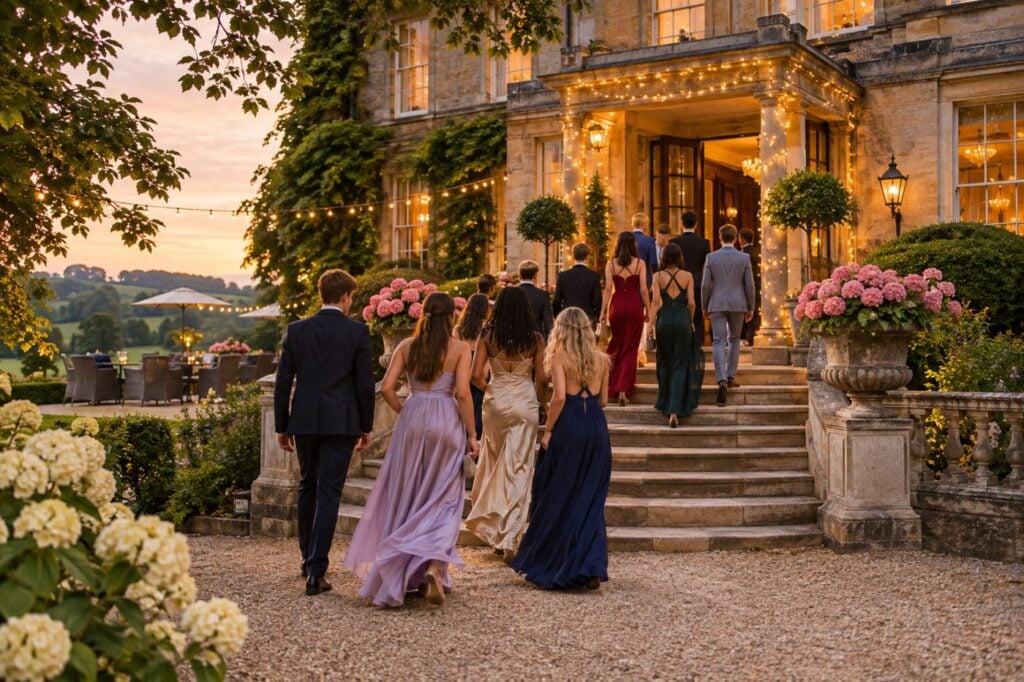
A school prom is a formal party for pupils who are leaving school. Everyone dresses up, there is a meal or a buffet, a disco, photographs, and a chance to say goodbye to school, teachers and to each other. The School Prom is a regular fixture in the school calendar in England and Wales. The main one is for Year 11, the GCSE year, when pupils are 15 or 16, and many schools and colleges hold another for sixth-form leavers aged 17 or 18. Most take place in June or July, once the exams are out of the way, though every school sets its own date.
We have sold prom gifts at Born Gifted for a good many years, and we have been through prom as parents ourselves, so this guide comes from experience. The plain facts come first: what a prom is, what age it happens, when, and how that differs around the UK. Then comes the part most parents actually lose sleep over, which is the cost, and how to keep it sensible. There is a short section on gifts at the end.
What is a school prom?
“Prom” is short for “promenade”, and the word comes from the United States, where it was being used for formal student dances by the late 1800s. American high schools made it famous, and several generations of British teenagers grew up watching it in films and on television. In Britain you will also hear it called a leavers’ ball, a leavers’ dinner or, in Northern Ireland, a formal. Whatever the name on the ticket, it is the same idea.
Does the UK have proms, and when did they start?
It does now. American-style school proms became increasingly popular in Britain during the 2000s, gradually replacing or supplementing the traditional leavers’ disco or ball, and they are now a familiar part of school life across the UK. Anyone who remembers school discos in a gloomy hall, with a few balloons and a questionable sound system, may wonder quite how we got from there to ballgowns, hired cars and a professional photographer!
It is easy for parents to roll their eyes at all this, especially once the bills start arriving. But for the pupils it is a real occasion: the last time the whole year group is together, after five or seven years in each other’s company. That is worth marking, and it does not take a fortune to mark it properly.
What age is prom in the UK?
It depends where you live, because the four nations number their school years differently. Broadly, there is one prom at the end of the GCSE stage and another at the end of sixth form:
- England and Wales: Year 11, when pupils are 15 or 16 and finishing their GCSEs. Many sixth forms and colleges hold a second one for Year 13 leavers, aged 17 or 18.
- Scotland: most often S6, the final year of secondary school, when pupils are 17 or 18. Some schools also hold one for pupils leaving at an earlier stage.
- Northern Ireland: Year 12 (ages 15 to 16) and Year 14 (ages 17 to 18). The year numbers there run one ahead of England’s, so Year 12 is the GCSE year. The event is usually called a formal.
The ages for England are the ones in the Government’s own table of school years; a pupil with a summer birthday may still be 15 on the night. Some primary schools now hold a leavers’ party for Year 6 and call it a prom, but this guide is about secondary school leavers.
When is prom in the UK?
For most schools in England and Wales, prom falls towards the end of the summer term, in late June or July, after the exams. There is no national prom date and no rule about it. Each school chooses its own, and some hold theirs before the exams start or in a gap between them.
The exam timetable gives a rough idea of the season. In 2027, according to the Joint Council for Qualifications’ key dates, GCSE and A-level exams begin on 10 May; the last GCSE paper is on 18 June and the last A-level paper on 22 June, with 23 June held back as a contingency day. In Scotland the exams are earlier: Qualifications Scotland’s 2027 timetable runs from 26 April to 3 June. These dates change every year, so treat them as a guide to the season rather than a date for the diary.
In Northern Ireland, school formals are not necessarily held at the end of the summer term. Some schools organise them earlier in the school year, in the autumn or spring term. Always check the date with the school rather than assuming it will be in June or July.
What happens at a school prom?
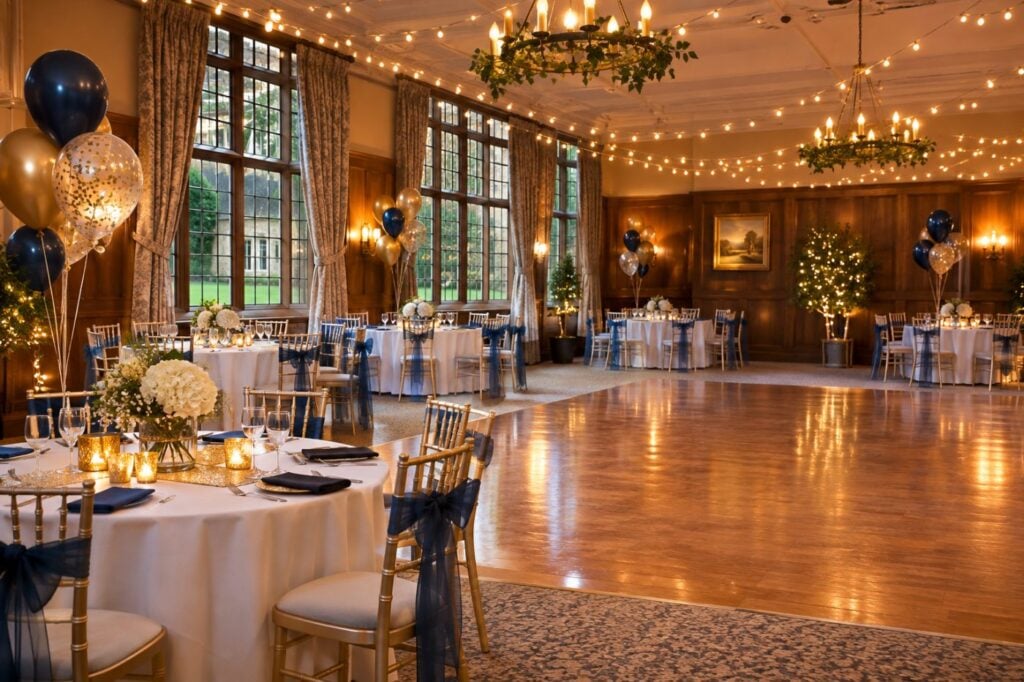
The details vary from school to school, but the shape of the evening is much the same everywhere. It is held at a hotel, a function room or the school hall. Pupils arrive, usually to a good deal of photography, and there is a sit-down meal or a buffet. After that come the speeches and awards, often light-hearted ones voted for by the year group (and at some schools a prom king and queen), and then the disco. At a school-organised prom, staff will usually be involved in supervising the evening, and the school sets the rules, including those on alcohol. If pupils have arranged their own event, check who is responsible for supervision.
A few things worry pupils more than they should. Nobody needs a date, whatever the American films suggest: plenty of pupils simply go with their friends. Nobody is obliged to wear a floor-length gown or a dinner jacket unless the school’s dress code says so, and the school’s letter will say what is expected. And parents are not usually part of the evening itself, beyond the lift there and the photographs beforehand, which is probably how everyone prefers it.
How much does a prom cost, and who pays?
More than most parents expect. Two UK surveys from 2026 give an idea of the scale. Research commissioned by Clearpay, reported in June 2026, put typical spending at around £313 a child across all school ages, from a OnePoll survey of 2,000 parents. A separate Confused.com survey published the same month reported an average of £680 among the 795 parents it asked. The two are not measuring quite the same thing, so they cannot be compared directly, and neither is a definitive average cost of a UK prom. What they agree on is the direction: this has become an expensive evening. Both surveys also found parents reporting higher spending on girls than on boys, with outfits, hair and make-up among the costs counted.
The ticket is rarely the problem; parents in the Confused.com survey paid £37 on average. It is everything around it that mounts up: the outfit, shoes and accessories, hair, make-up, transport, photographs and sometimes an after-party. We can vouch for this as parents ourselves. By the time you have dealt with the suits, the transport and all the other arrangements, the total can come as quite a surprise.
As for who pays, the bill mostly lands with parents. The Clearpay research found grandparents contributing in around one case in five, and there is nothing wrong with a teenager putting some of their own savings or Saturday-job money towards the extras they particularly want. What matters is that nobody feels pushed into spending hundreds of pounds simply because other families are. A prom can be a special occasion without turning into a financial competition.
How to keep the cost of prom under control
These are the things we would tell any parent. The first three are the ones we feel most strongly about.
- Share the transport. Encourage your child to travel with a larger group of friends. If several of them split the cost of a hired vehicle, it works out considerably cheaper per head than each family arranging its own.
- Buy the outfit second-hand. Vinted and the other second-hand marketplaces are full of prom dresses and suits that have been worn once. You can often find something really smart for a fraction of the original price, and if it is unlikely to be worn again you can sell it on afterwards.
- Or hire or borrow it. There is no need to buy everything new for a single evening. A hired dinner suit, an older cousin’s jacket or a borrowed dress does the job just as well.
- Agree a budget early. Decide what you can afford before the shopping starts, and tell your teenager the figure. It is a much easier conversation in March than at the till.
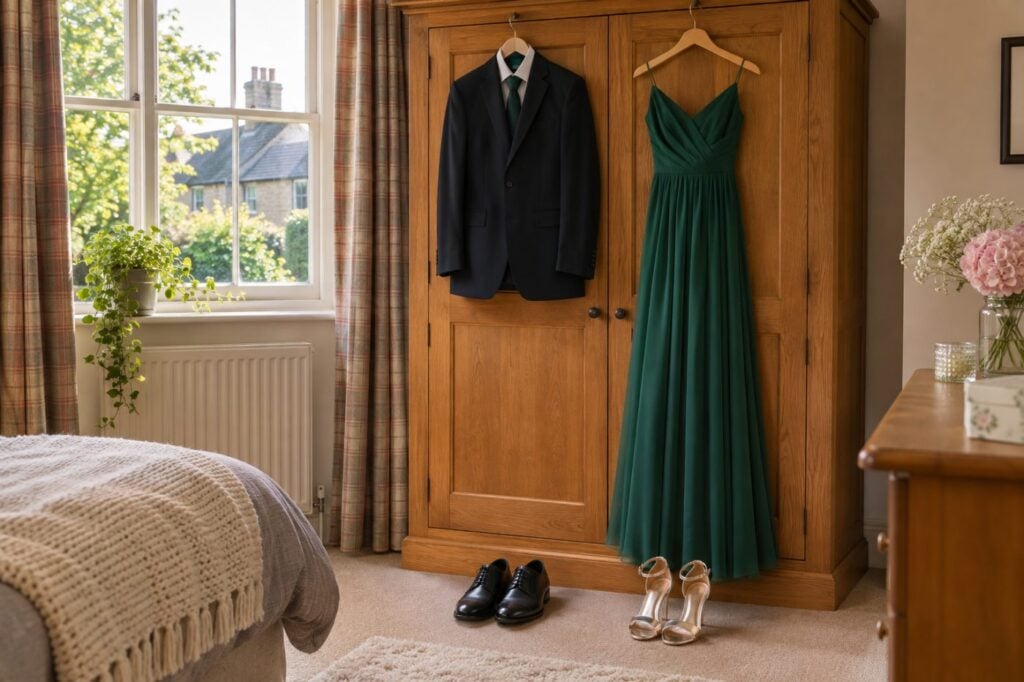
- Do the hair and make-up at home. Getting ready with friends is half the fun, and it costs next to nothing.
- Ask about help if money is tight. There are charities around the country that lend prom dresses and suits free of charge, and it is worth asking the school, in confidence, whether it knows of one nearby. Some charities will even loan the use of a classic car and driver (for a small donation)
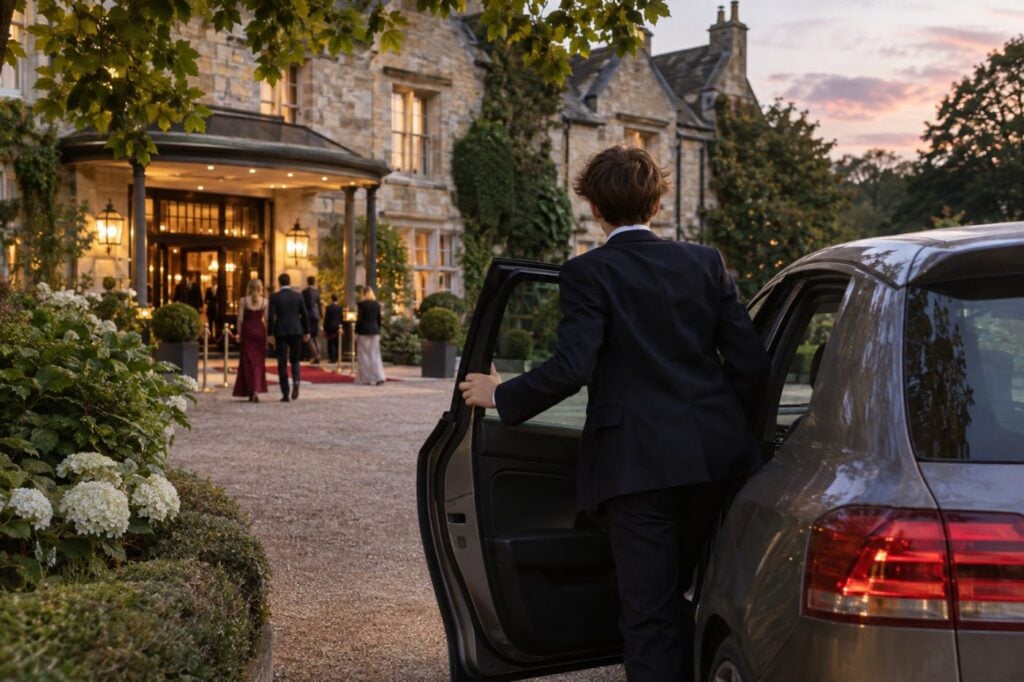
And please do not get hung up on the grand arrival. Some teenagers love the idea of turning up in a limousine or Ferrari, and that’s absolutely fine if the family can afford it. But no child needs an expensive car to enjoy their prom, and there is nothing wrong with being dropped off by Mum or Dad. The evening is about being with friends, not about how impressive the transport looks outside.
Getting there safely
If you do hire a car or a limousine, check who you are hiring it from. GOV.UK’s guidance on limousine licensing says limousines must be run by a licensed operator unless they are hired out without a driver. A vehicle carrying up to eight passengers needs a private hire operator’s licence, and one carrying nine or more needs a public service vehicle operator’s licence. Ask the company which licence it holds; if you are in any doubt, your local council’s licensing team can tell you whether a private hire firm is licensed.
Beyond that, the checks are common sense. Make sure the driver is licensed and the vehicle insured for hire, that there is a proper seat and seatbelt for every passenger, and that the time and place for the journey home are agreed in advance, preferably in writing.
After the prom
A school-organised prom is usually supervised; what happens afterwards is where parents need a plan. Know how your teenager is getting home and at what time, make sure their phone is charged, and agree who they will ring if the arrangements change. If there is an after-party, find out whose house it is at and whether an adult will be there. It is also worth a gentle reminder that the legal age for buying alcohol is 18. Schools and venues have their own alcohol policies too, so make sure your teenager understands the rules for their event.
Prom gifts: what parents actually buy
A prom gift is a nice touch, not an obligation, and after everything above we would be the last people to tell you to spend more. But plenty of parents like to mark the occasion with something lasting, and this is the part we know from the shop side.
Parents are by far the most common buyers of prom gifts. For girls, jewellery is the most popular choice; boys are more likely to be given an engraved pocket watch or a bracelet; and personalised photo frames are popular for both. Those are simply the patterns in our own orders, not rules about what anyone should receive.
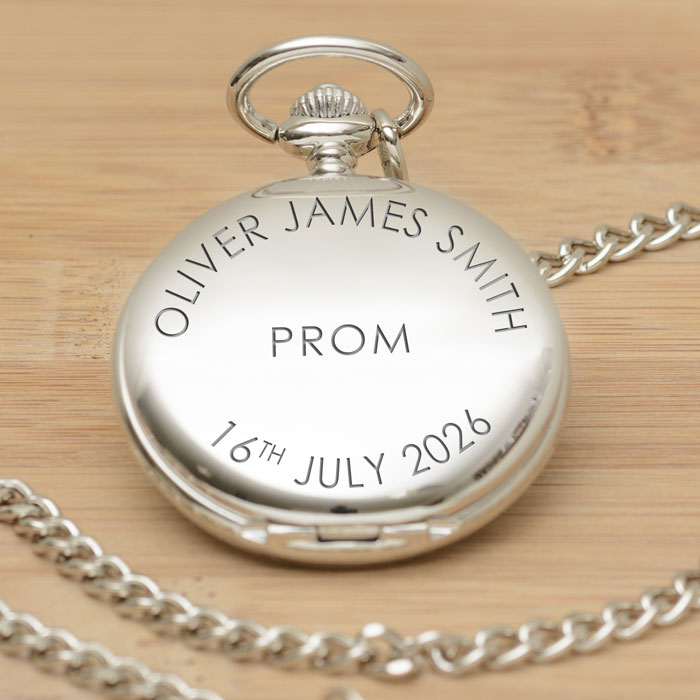
Our bestselling prom gift for boys is the personalised prom pocket watch: a traditional chrome-finish pocket watch on a chain, engraved on the back with the word PROM, a name and a date. It is usually given beforehand, for the good reason that it can be worn on the night as the finishing touch to a suit.
The other is the personalised Prom Night photo frame, which is bought for boys and girls alike. It holds a 10 x 8 inch portrait photograph, has the word PROM fixed at the top, and can be engraved with two lines of your own underneath. It can be given before the prom, but the photograph that goes in it will come afterwards, which makes it a keepsake of the evening rather than part of it.

Jewellery is a slightly different matter. In our experience girls are less likely to wear a gift of jewellery to the prom itself, because they tend to have firm ideas about what goes with the outfit. So if you are buying a necklace or a bracelet, think of it as a memento of the occasion rather than something that has to match the dress.
On wording, simple is best, and simple is what most customers choose. For example “Class of 2027” would be a favourite, and so is a short message from the parents along the lines of “With love from Mum & Dad”. Before you order, check how much space the item allows and whether any of the wording is fixed. The frame takes up to 30 characters on each of its two lines, which is room enough for a message like that. The pocket watch is more limited: the word PROM is fixed, with one line above it for a name and one below for a date, up to 20 characters each and all engraved in capitals.
Most prom gift orders reach us only a week or two before the big night, usually once the outfit and the transport have finally been sorted out. That is understandable, but June is a busy month and a personalised gift takes time to make. Every product page shows a delivery estimate, so check it before you order and leave yourself a margin.
The one thing to remember
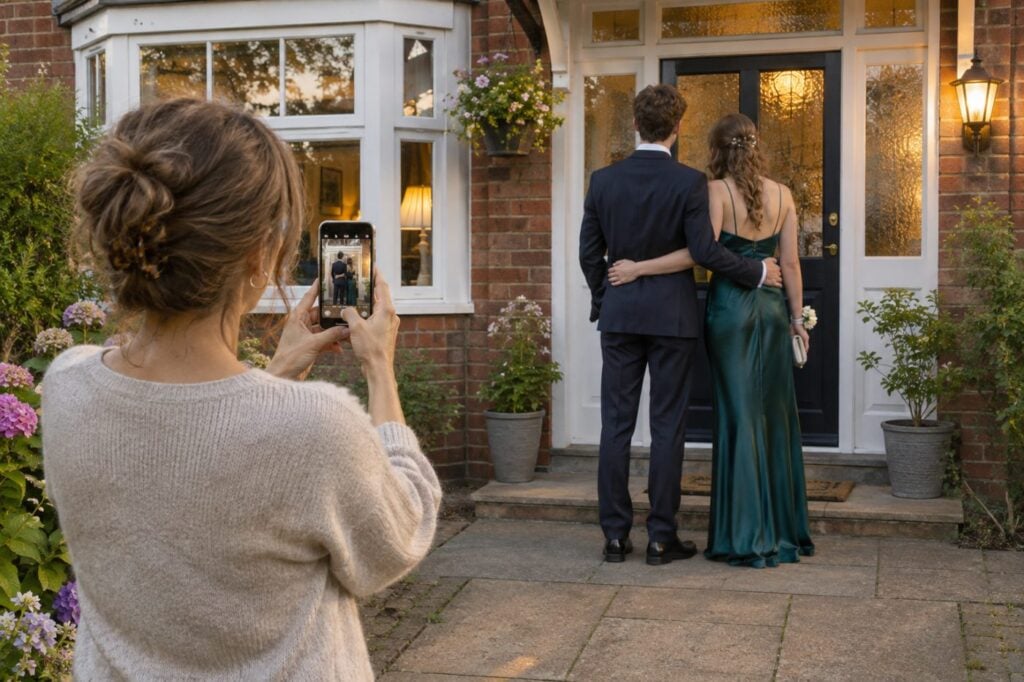
It is the evening with their friends that your child will remember, not what the car cost. Help them look and feel their best within what you can comfortably afford, make sure they can get there and back safely, take a photograph before they leave the house, and then let them get on with it