
The School Nativity Play: Who Plays Whom, What to Expect and How to Remember It
11 December 2014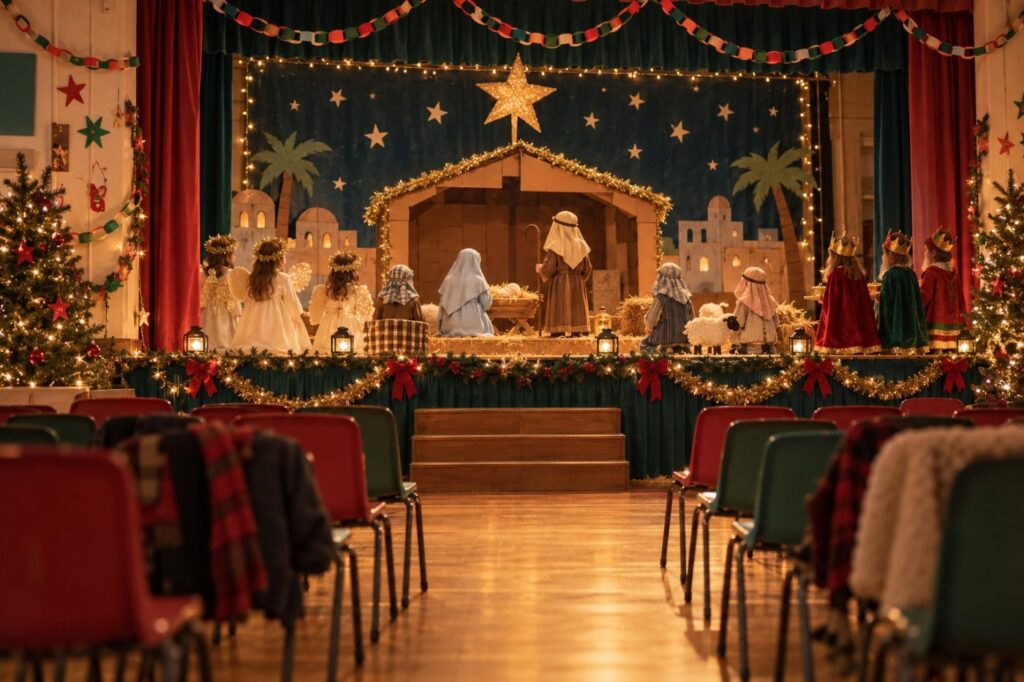
A nativity play is the Christmas story told by children: Mary and Joseph’s journey to Bethlehem, no room at the inn, the birth of Jesus in a stable, and the shepherds and wise men who come to see him. Most British primary schools put one on in December, usually with carols, a lot of tinsel and an audience of very proud parents. For many families it is the first time they see their child on a stage.
The idea is older than you might think. In 1223, St Francis of Assisi staged a living nativity in a cave at Greccio in Italy, with a manger, hay, an ox and a donkey, so that local people could picture the first Christmas. School nativities are a gentler descendant, with more tea towels.
Who’s who in a nativity play
The cast list varies from school to school, but these are the parts you are most likely to see:
- Mary and Joseph. The leads. Mary usually carries the baby Jesus, who is generally a doll.
- The Angel Gabriel. Brings Mary the news, and later tells the shepherds.
- Angels. The most common part of all in our survey, which is handy when a whole class needs something to do.
- Shepherds. Tea towels on heads, dressing gowns, and a crook if anyone has one.
- The wise men, or three kings. They follow the star and bring gold, frankincense and myrrh. The Bible never says there were three, but three gifts usually means three kings.
- The innkeeper. The one who says there is no room. The Bible only says there was no room for them; the innkeeper was added later, but no nativity would be complete without one.
- The star, the donkey, the sheep and the narrator. Plenty of parts for the youngest and the shyest. The narrator often has the most lines of anyone.
Modern nativities are rather more inventive. When we surveyed parents, the newcomers to the stable included Santa, reindeer, chickens, robins, mice, baubles and, in one case, Ant and Dec, who were probably not present at the birth of Jesus. Nothing would surprise us now. A UFO or a dinosaur? Quite possibly.
Do schools still do nativity plays?
In 2014 we asked just over 300 parents about their children’s nativities and their own. Three-quarters (76%) said their child’s school put on a nativity play, compared with 92% when they were at school themselves. But 94% wanted the tradition to continue, so it is still very much loved.
The parts themselves have barely changed in a generation. Angels were the most common role, then shepherds, then kings. And most parents did not mind which part their child was given, although 17% admitted it was quite important to them that their child played a lead, such as Mary or Joseph.
The survey is now more than ten years old, so the numbers will have moved. The chaos, as far as we can tell, has not.
What to expect on the day
Expect chaos. There may be forgotten lines, very enthusiastic singing, and the odd character nobody remembers from the story. That is the whole joy of it.
The parents in our survey had some wonderful stories. Mary hitting Joseph over the head with a toy lamb. Shepherds chasing each other round the stage with their crooks. The Angel Gabriel pushing a donkey off the stage. Baby Jesus caught in a tug-of-war. Sheep falling asleep, shepherds picking their noses, and a choir of angels singing louder than everyone else put together. Our favourite was the little drummer boy who, when his big moment came, sang “Little Door Key” instead of “Little Donkey”.
A few practical things help:
- Costumes. Schools often ask parents to make them. A tea towel and a dressing-gown cord make a shepherd; tinsel and a white T-shirt make an angel. Nobody is judging.
- Photos and filming. Check what the school allows before you get your phone out, and be careful about posting pictures of other people’s children online.
- Tickets and seats. School halls fill up fast. Arrive early if you want a view of anything other than the back of someone’s head.
- Tissues. For the laughing, and for the other kind.
Most of all, treasure the moment. They grow up quickly, and before you know it those wonderful, slightly chaotic school nativities are just a lovely memory.
Marking a first nativity
A first nativity is a lovely thing to mark, and in our experience grandparents are often the most generous here. They do love to spoil their grandchildren, particularly at Christmas.
Two things we sell that fit the occasion well:
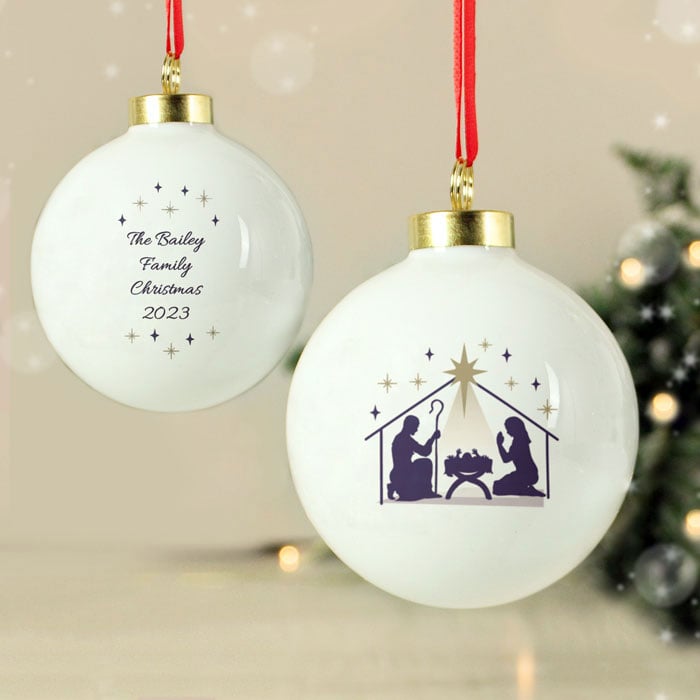
- A personalised nativity bauble. A ceramic bauble showing the nativity scene, with four lines of your own words on the back. The child’s name, their part, the school and the year make a keepsake that comes out every Christmas: “Ruby, Angel Number Three, St Mary’s, 2026”.
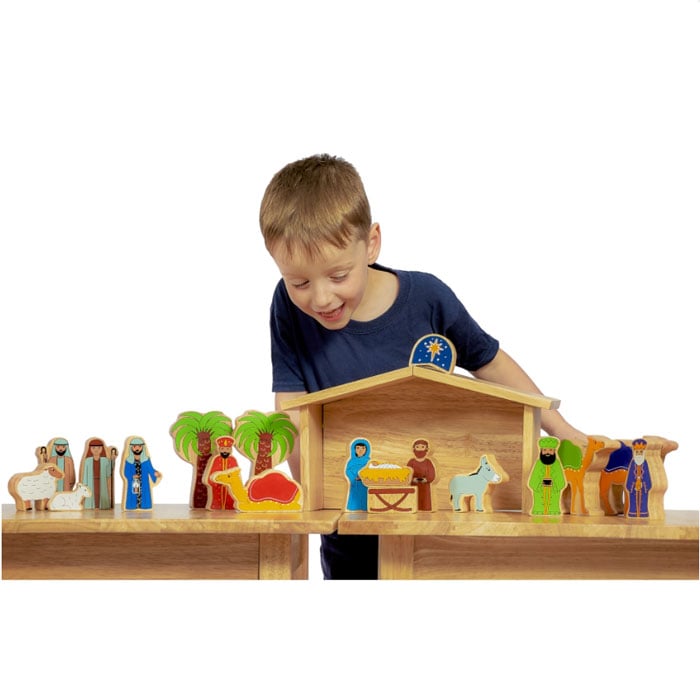
- A deluxe wooden nativity set. Ten hand-painted characters, seven animals and a stable with its star, handmade in Sri Lanka from FSC-certified wood. It is always a big hit at this time of year, and a good way to tell the story at home. It has small parts, so it is for ages three and up.
Christmas has a habit of creeping up on all of us. If you would like something special for the day itself, order a little earlier rather than in the week of the performance, and check the delivery estimate on the product page before you buy.