
What Is Fair Trade? How It Works and What to Look For
12 March 2018
“Fair trade” is one of those phrases everyone has heard and few people can explain. We have sold fair trade wooden toys since Born Gifted started in 2003, we get asked about them, and so we have had to learn what the words mean. This guide explains fair trade in plain English: what it is, how it differs from the Fairtrade Mark on your coffee, the ten principles behind it, how to check whether a claim stands up, and what it does not promise.
What fair trade means
Fair trade is an approach to buying and selling that aims to improve trading conditions for producers and workers, particularly those with little bargaining power in international markets: small workshops, farms and family businesses, for the most part. The World Fair Trade Organization, the global body for the movement, describes it as a trading partnership based on dialogue, transparency and respect. In practice that means paying a fair price agreed with the maker rather than imposed on them, paying promptly, sticking with the same producers for years rather than chasing the cheapest quote, refusing child labour and forced labour, insisting on safe workplaces, and helping producers build skills so they are less dependent on any one buyer.
Fairtrade and fair trade: not quite the same thing
This is the point that trips most people up, so its worth explaining the difference. There are two systems with nearly the same name.
Fairtrade, one word, with a capital F, is a product certification. It belongs to Fairtrade International and, in Britain, the Fairtrade Foundation, and it is the blue, green and black FAIRTRADE Mark you see on coffee, tea, chocolate, bananas, sugar, cotton, flowers and wine. It certifies ingredients and raw materials: the cocoa in the bar, the cotton in the T-shirt. The standards vary by product; for many, such as coffee and cocoa, they include a Fairtrade Minimum Price and an extra sum, the Fairtrade Premium, that the producers’ organisation decides how to spend, and an independent certifier checks the chain. You will not find the Mark on a wooden toy: the toys we sell rest on their maker’s fair trade practices and memberships, not on Fairtrade product certification.
Fair trade, two words, is the wider movement, and it is about how a whole business behaves rather than what one ingredient is made of. The World Fair Trade Organization sets the ten principles below and checks member enterprises against them, by self-assessment, audits and visits from other members; those that pass can use the WFTO label. The WFTO itself says its system is not a product certification, which is the whole distinction in one sentence. Crafts, toys, homeware and clothing made by small producers are usually fair trade in this sense, not Fairtrade-certified.
In the UK there is a third name you will meet: BAFTS, the Fair Trade Network UK, a group of independent fair trade shops and suppliers founded in Durham in 1995. Its members commit to the ten principles and are assessed by their fellow members every year, with evidence, and BAFTS is itself a member of the WFTO. So a retailer or importer who tells you they are a BAFTS member is telling you something you can check.
The ten principles, in plain English
The WFTO’s ten principles of fair trade are the yardstick everyone in the movement uses, BAFTS included. They are:
- Give marginalised producers a way in. Work with small, disadvantaged makers so they can earn a living and stand on their own feet.
- Be open and accountable. Decide things transparently, communicate honestly, and involve producers in the decisions that affect them.
- Trade fairly. Long-term relationships, prompt payment, no profiting at the maker’s expense.
- Pay fairly. Agree prices through discussion, make sure workers are fairly paid, and work towards wages that support a decent standard of living.
- No child labour and no forced labour.
- No discrimination, equal pay for equal work, and freedom for workers to organise.
- Safe and healthy working conditions.
- Help producers grow: training, advice and investment in their skills.
- Promote fair trade honestly, which includes not claiming more than you do.
- Look after the environment: sustainable materials and lower-impact methods where possible.
Notice what is not on the list: a particular wage figure, a particular working week, a promise about packaging or shipping. Each enterprise is judged on how well it lives up to the principles, and the detail varies from one to the next.
How to check a fair trade claim
Anyone can print “fairly traded” on a label. What makes the difference is whether somebody independent has looked. Three things are worth looking for.
- The FAIRTRADE Mark on food, drink, cotton and flowers. It is a registered certification mark; it cannot be used without the licence.
- The WFTO label, or “Guaranteed Fair Trade” status, on crafts and goods from member enterprises; you can look a company up on the WFTO’s website.
- BAFTS membership for UK shops and importers; the BAFTS site lists its members and explains the difference between fair trade and Fairtrade in its own words. A shop’s membership tells you about its commitment, not about every item on its shelves, since members may also sell locally made or recycled goods; check the particular product and its supplier too.
Beyond the badges, a company that takes this seriously will have written it down: a fair trade policy on its website naming its producers, how it pays them and how often it visits, rather than a single sentence on the packaging. If you cannot find anything of the kind, that tells you something.
Fair trade, green and safe are three different things
It is easy to assume that a fair trade toy is also an environmentally sound toy and a safe one. Sometimes it is all three, but they are separate questions and each needs its own evidence. Fair trade is about the people who made it. Whether the wood is sustainably sourced, whether the paint is tested, whether the thing is suitable for a one-year-old: those are matters of materials, testing and age grading, and a BAFTS membership says nothing about them. Equally, “handmade” is not a fair trade claim, and nor is “made in a small village”. The honest approach is to ask each question separately, which is what we try to do below. We have written more about the environmental side, and about what we can and cannot claim as a shop, in our guide to raising eco-aware children.
Does fair trade cost more?
Sometimes, yes, though not always, and not only because of the trading terms. Customers sometimes remark that a large wooden playset costs a good deal more than a mass-produced plastic one, and that is true. The price of a toy reflects its size, its materials, how it is made and how much work went into it, as well as what the maker was paid. What we can say from experience is that most people are happy to pay the difference once they understand what is behind it, and that the big wooden sets tend to be bought as the present for an occasion rather than on a whim. We would not claim that fair trade guarantees a toy will last longer, and there is nothing wrong with a good plastic toy that gives years of fun. But a well-made wooden ark does tend to outlive the child it was bought for, which changes the arithmetic.
Lanka Kade: the fair trade toys we have sold since 2003
Lanka Kade is a British company whose wooden toys are designed in the UK and handcrafted in Sri Lanka, and it has been in our range since the day Born Gifted opened. We chose it for two reasons. The first was the toys themselves: their Noah’s Arks were, and are, substantial, traditional pieces that make an impressive present. The second was the story. The company’s founders, Diane and Upul, were in Sri Lanka in 1994 when they met a group of former factory workers still chasing payment for work they had finished three months earlier, and decided on the spot that they would only buy from people who looked after their workforce. That is their account, on their own fair trade page, and it has shaped the business ever since. We liked that they were not simply importing cheap toys but building long-term relationships with the people who made them. More than twenty years on, both reasons still hold.
What that looks like in practice, again from Lanka Kade’s own published policy: direct trading relationships with its Sri Lankan producer groups, which Upul visits regularly; prompt payment and interest-free loans; products designed around the makers’ skills; frequent visits and audits to rule out child or forced labour; first-aid and health-and-safety training; training for the producer groups in leadership, book-keeping and toy safety; and membership of BAFTS since 2001, with Diane chairing its board for a couple of years. Lanka Kade also says its sites undergo an annual SMETA social audit by Bureau Veritas, which is a check rather than a guarantee, but a serious one. On the environmental side, its policy is specific rather than vague: the toys are made mainly from rubberwood, a plantation timber from trees that have finished producing latex, about 70% of the range is FSC-certified, and the goods come to Britain by sea rather than air. Lanka Kade does not claim the WFTO label and neither do we on its behalf; BAFTS membership and the ten principles are what it has, and they are checkable.
Choosing a fair trade wooden toy
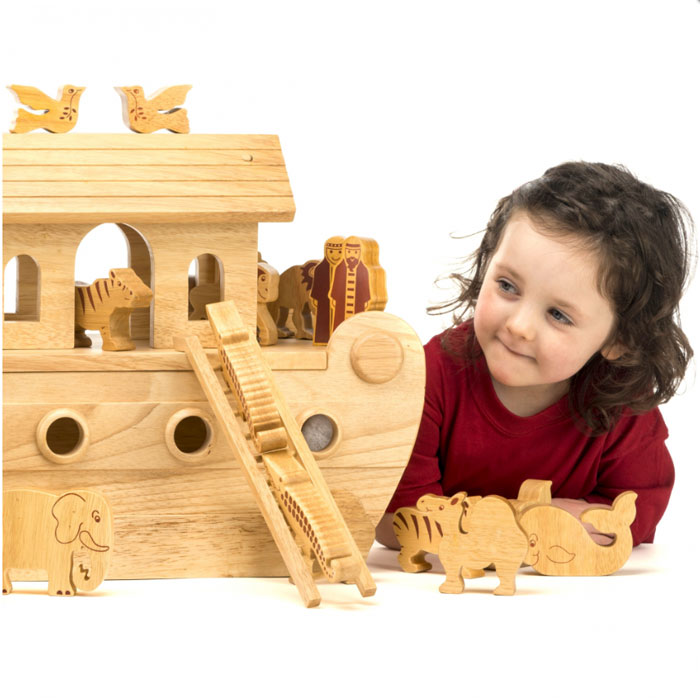
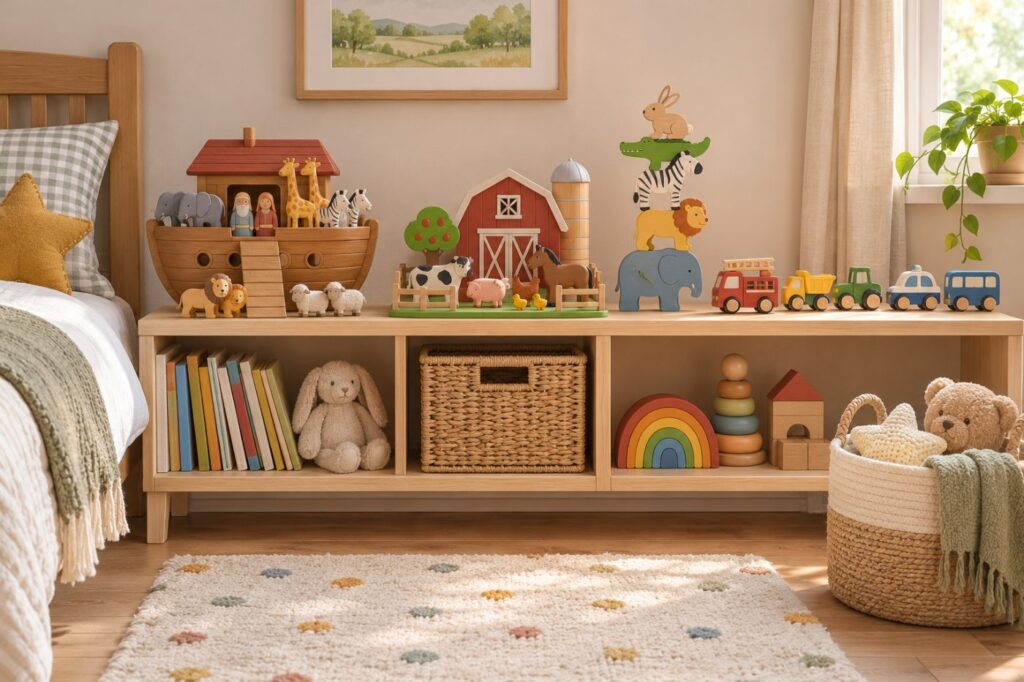
The Giant Deluxe Noah’s Ark is the bestseller in our Lanka Kade range by some distance, and the arks as a family outsell everything else. Grandparents are the keenest buyers, and the occasions are christenings and special birthdays: this is a present chosen to mark something, not picked up on the way to a party. We call the big arks heirloom gifts: substantial wooden toys built for years of play, with every chance of being handed down to younger siblings and beyond. One practical point: the Giant Ark contains small parts and are not suitable for children under three. People buy it for a baby’s christening all the time, which is fine, as long as it is understood as a gift to be kept until the child is old enough to play with it safely. (Our christening gifts guide has more on choosing a present that grows with the child.)
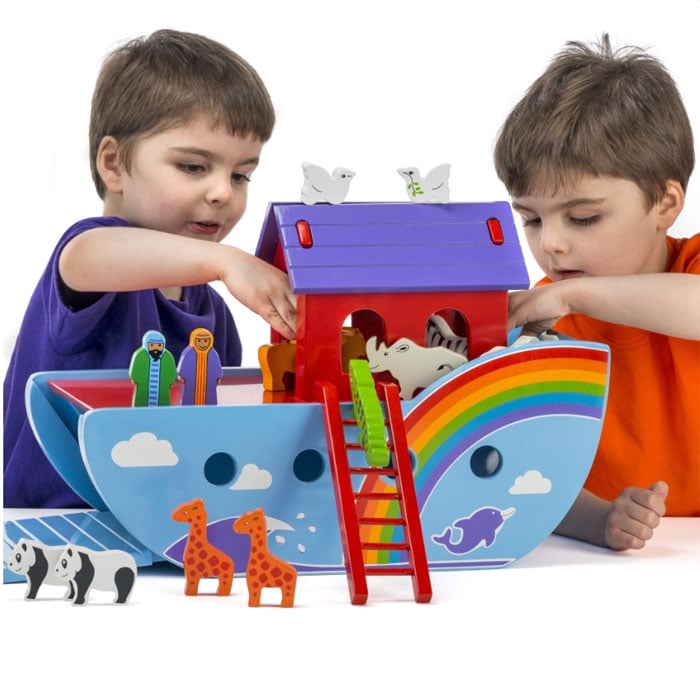
The questions customers ask us about these toys are the right ones. The commonest is whether a toy is made in Britain or overseas, and China in particular. Lanka Kade’s are designed in the UK and handcrafted in Sri Lanka, and we find people are quite comfortable with that once we can explain the maker’s fair trade credentials; where something is made tells you nothing, by itself, about how its makers were treated. Is the paint safe? Lanka Kade says every product is tested by an independent accredited test house against the EN71 toy safety standard, paints, dyes and materials included, and carries the UKCA or CE mark; its toy safety page sets this out. What age is it for? Every piece carries an age warning, and the under-threes symbol means exactly what it says. If the Giant Ark is beyond the budget, there are smaller arks, the Large Rainbow Noah’s Ark among them, and other playsets in our Lanka Kade range, made the same way; check each one’s age recommendation before you buy, as many contain small parts.
Being straight about the rest of our range
Lanka Kade is our only fair trade supplier. Born Gifted sells gifts from a good many manufacturers and personalisation partners, with different materials, processes and ways of working, and we have not had the rest of the range assessed against fair trade standards, so we do not describe it that way. That does not mean everything else is made badly; it means we cannot claim an affiliation we have not established. If you want fair trade from us, the Lanka Kade range is where it is.
Our number-one tip
Check the credentials behind the claim. The words “fair trade” in a product title cost nothing; a FAIRTRADE Mark, a WFTO label or a BAFTS membership can be looked up. Go to the maker’s website and see whether it names its producers and explains how it pays and visits them. Then ask the other two questions separately: what is it made of, and what age is it for. A toy can be ethically made, sustainably sourced and safe for your child, but each of those is a different claim with different evidence, and no badge covers all three.