
Christening, Communion and Confirmation: What They Are and What to Give
25 September 2012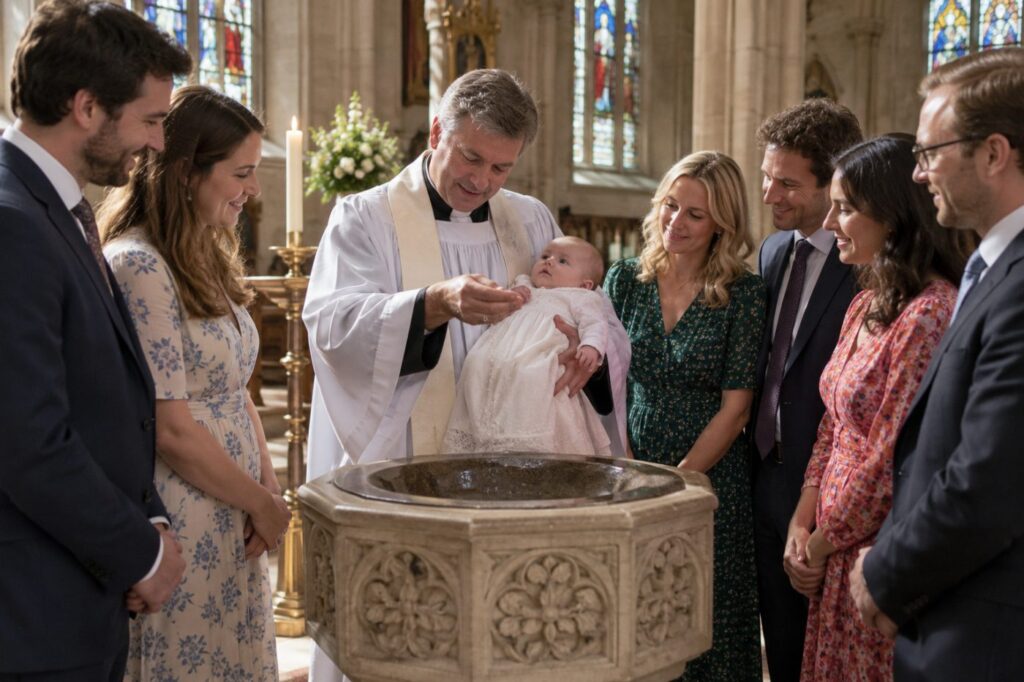
If you have been invited to a christening, a First Holy Communion or a confirmation, you may be wondering what the occasion actually involves, how it differs from the others, and whether you are expected to bring a present. You are not alone. We have been selling gifts for all three occasions since 2003, and one question that comes up time and again is whether a christening and a baptism are the same thing. (They are, but more on that below.)
This guide explains each ceremony in plain English, the order they usually happen in, how Catholic and Church of England practice differs, and what people tend to give. We have also included naming ceremonies, the non-religious way of welcoming a baby, because that is what many families choose instead.
The three ceremonies at a glance
- Christening (baptism). Usually under one, but any age. Water, promises by parents and godparents, and often a candle; it welcomes the child into the Christian church. Typical gifts: money boxes, teddies, blankets, silver keepsakes, Bibles.
- First Holy Communion. About 7 or 8 (Catholic). The child receives the Eucharist for the first time, at a special Mass. Typical gifts: watches, tankards, bracelets, rosaries, Bibles.
- Confirmation. Varies: often early teens, sometimes younger. The person affirms their faith, with prayer and the laying on of hands, and anointing in Catholic services. Typical gifts: jewellery, watches, pens, Bibles, crosses.
- Naming ceremony. Any age, usually a baby. A non-religious welcome, often led by a celebrant, sometimes with guideparents. Typical gifts: the same keepsakes, without religious wording.
What is a christening? (And is it the same as a baptism?)
Yes, it is. Baptism is the religious act: the water, the words and the promises. Christening is the everyday name for the service, and it comes from the older sense of giving a child their Christian name. Both the Church of England and the Catholic Church use the two words for the same ceremony, so if the invitation says baptism and your aunt says christening, you are going to the same church on the same day.
A christening welcomes a child into the Christian church. In the Church of England, parents and godparents make promises on the child’s behalf, the vicar makes the sign of the cross on the baby’s forehead, pours water over their head, and a candle is often given to the family, representing Christ as the light of the world. A Catholic baptism follows a similar shape, with the water, the promises, a candle and an anointing with holy oil.
Most christenings happen in the baby’s first year, but there is no upper age limit. Older children and adults are baptised too, and some families wait until a child is old enough to take part; our guide to later christenings covers that.
Godparents
Godparents promise to support the child as they grow up, particularly in their Christian faith. The rules differ between churches: the Church of England normally asks for three godparents, while the Catholic Church generally has one or two, with particular requirements about their faith and religious practice. If you have been asked to be a godparent, it is worth checking the requirements with the church beforehand. We have also written a separate guide to what godparents do and what is expected of them.
What if the church does not christen babies?
Not every church does. Baptist churches and some other free churches baptise people only when they are old enough to decide for themselves, usually by full immersion. For babies they hold a dedication or thanksgiving service instead, where the parents give thanks and promise to bring the child up in the faith. If you are invited to a dedication, it is the same sort of occasion as a christening from a guest’s point of view, and the same sort of present is welcome.
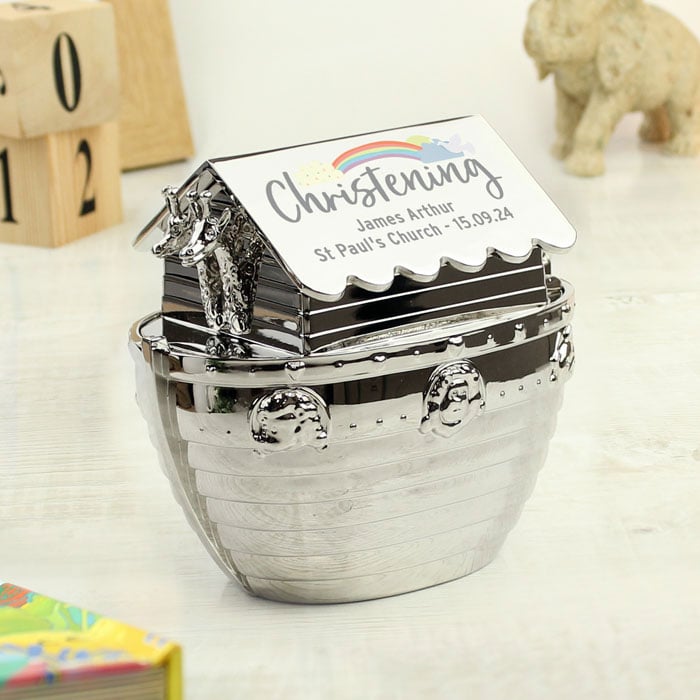
For the day itself, our separate christening guide covers planning, what to wear and what happens at the party afterwards.
What is a First Holy Communion?
First Holy Communion is a Catholic occasion. It is the first time a child receives the Eucharist, the bread and wine that Catholics believe become the body and blood of Christ, and it usually happens when they are about seven or eight, often with a whole class of children from the parish at a special Mass in May or June. The child will already have been baptised, and will have spent months preparing.
Church of England children do not usually have a First Holy Communion as a separate occasion. Traditionally they received communion for the first time after confirmation, although some Church of England parishes also admit baptised children to communion before confirmation, with the bishop’s permission. The arrangements and traditions differ from those of the Catholic Church.
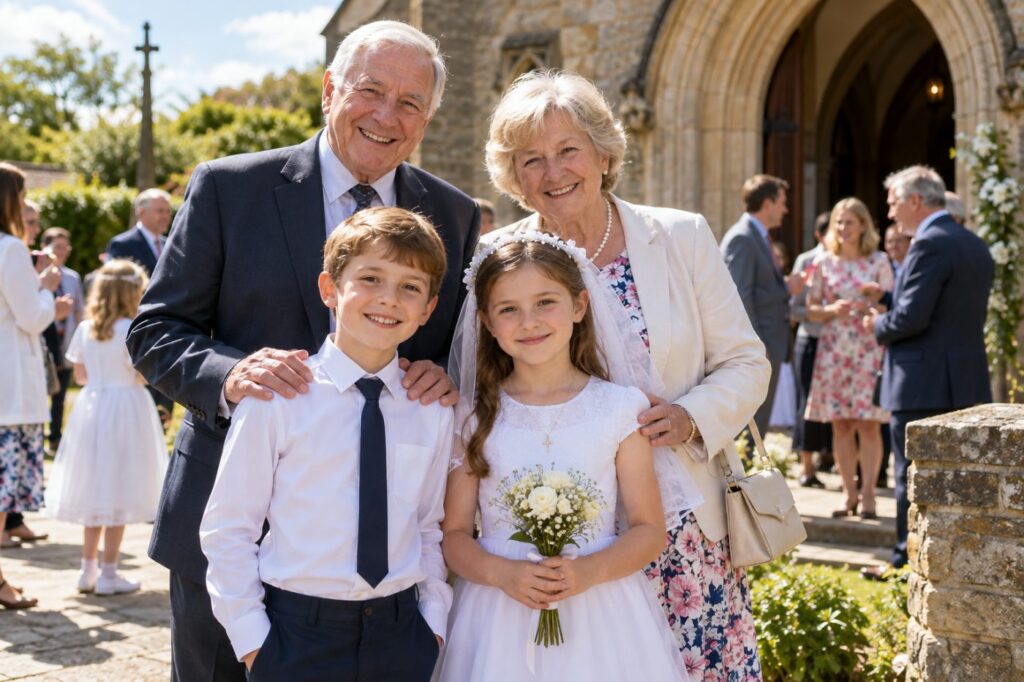
We have written a full guide to First Holy Communion: what happens at the Mass, how long it takes, what to wear and what to give. We will not repeat it all here.
What is a confirmation?
Confirmation is an important step in a person’s Christian faith. In the Church of England, it is the opportunity for someone who has been baptised to make their own commitment to their faith. In the Catholic Church, confirmation is a sacrament associated with receiving the gift of the Holy Spirit and strengthening the person’s connection to the Church. A bishop usually conducts it, laying hands on each candidate and, in the Catholic Church, anointing their forehead with holy oil called chrism. Catholic candidates normally have a sponsor, often one of their godparents, who stands with them.
The age varies more than for any other ceremony, and it is worth checking rather than assuming. In the Church of England there is no fixed age: anyone who has been baptised and is old enough to answer for themselves can be confirmed, and candidates range from children of ten or so to adults. In the Catholic Church in Britain, confirmation has traditionally come in the early teens, after First Holy Communion, but some dioceses have returned to the older order and confirm children before their First Communion, at around seven or eight. So a Catholic confirmation might be a fourteen-year-old or a seven-year-old, depending on where the family lives.
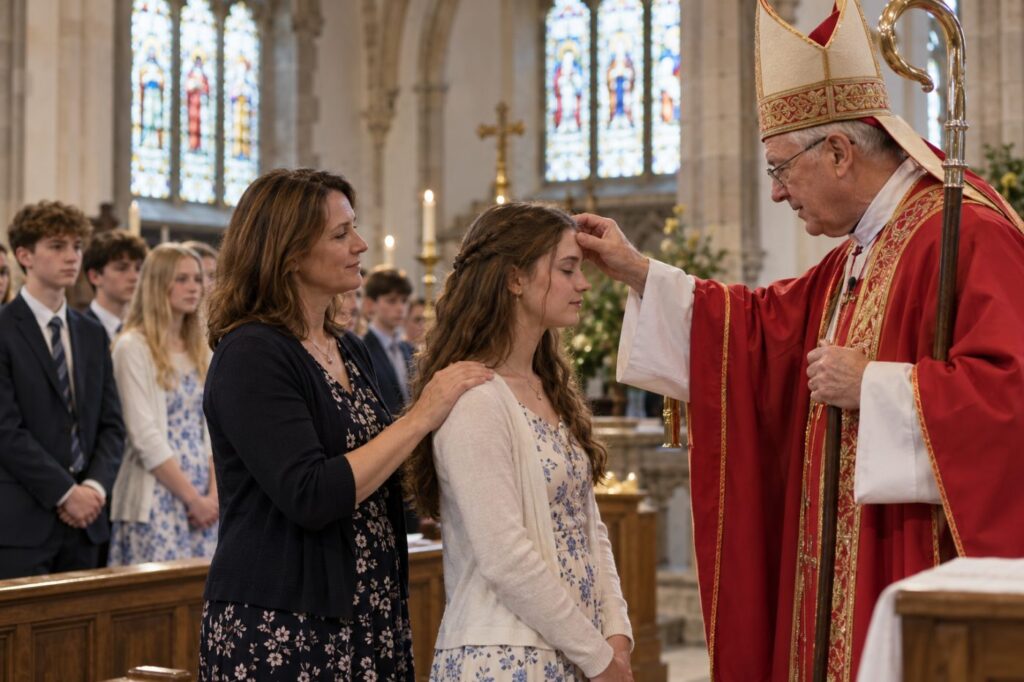
Our confirmation guide goes into the service in more detail.
The order they happen in
For a Catholic child the usual sequence is baptism as a baby, First Holy Communion at about seven or eight, and confirmation some years later, unless their diocese confirms first. For a Church of England child it is baptism, then confirmation, with communion either after confirmation or, in many parishes now, before it.
Naming ceremonies: the non-religious alternative
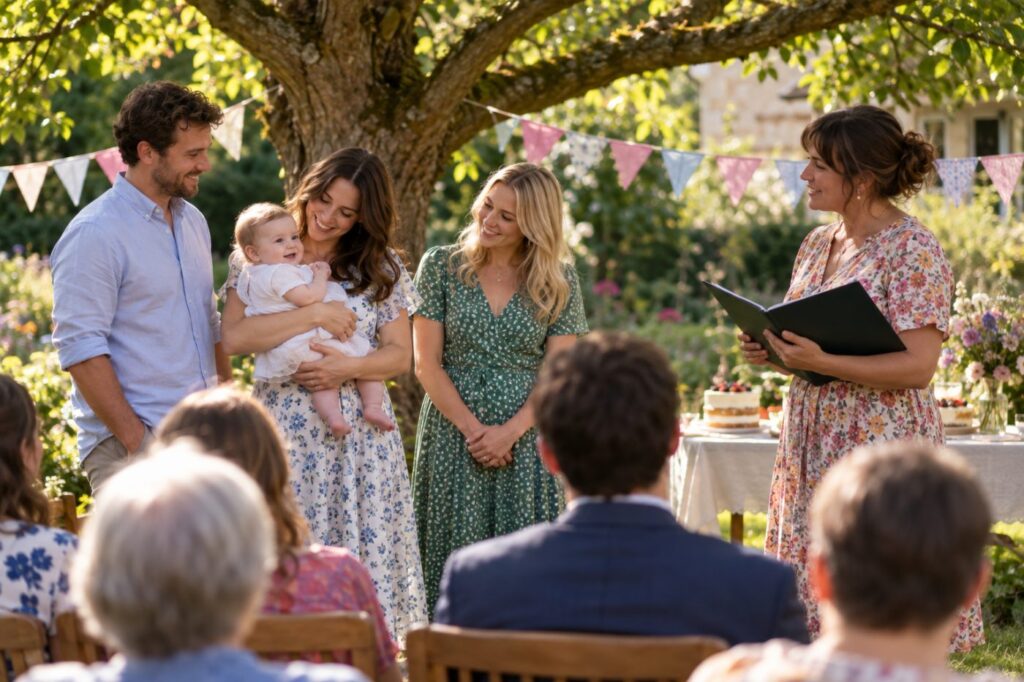
A naming ceremony is a way of welcoming a baby and giving them their name without a church or any religious promises. It can be led by a celebrant, who writes the ceremony with the family, or organised by the family themselves, and it can be held anywhere: a garden, a village hall, a hotel. Instead of godparents, families often choose guideparents, sometimes called mentors or guardians, who promise love and support without the religious element. Like a christening, a naming ceremony has no legal standing; the registration of the birth is a separate matter.
When it comes to presents, most traditional christening gifts work just as well for a naming day. We sell plenty of engraved money boxes, personalised teddy bears, pewter keepsakes and jewellery for naming ceremonies; the main difference is simply leaving out the religious wording and symbols.
A naming ceremony can mean every bit as much to the family as a christening. Our guide to naming day ceremonies has more, and we have a range of naming day gifts with no religious wording on them.
What to give for each occasion
This is the part we know best. After more than twenty years of selling gifts for all four occasions, the biggest difference is simply the age of the child.
Christening gifts
Most christenings happen in the first year, so traditional baby gifts are the most popular: engraved ABC money boxes, personalised teddy bears, baby blankets, silver keepsakes and little jewellery boxes. Bibles are popular too, even though the child will not be reading one for a while; they are bought as a keepsake for later, and our guide to the different types of Bible helps with choosing one. See our personalised christening gifts.
First Holy Communion gifts
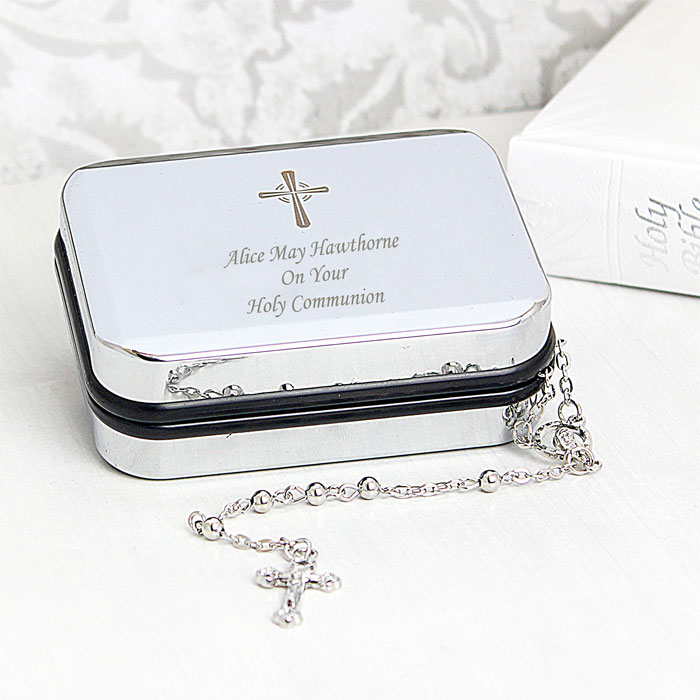
At seven or eight the presents grow up a little. Engraved watches and tankards are popular for boys, and personalised bracelets, religious jewellery and rosaries for girls, with Bibles a good choice for either. Our Holy Communion gifts are all here.
Confirmation gifts
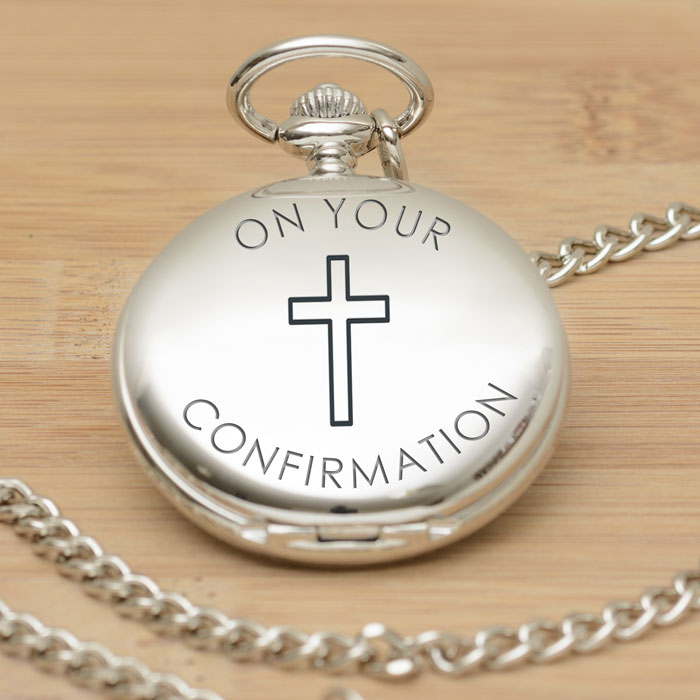
Confirmation candidates are often older children or teenagers, so many customers look for something a little more grown-up: engraved jewellery, watches and pens, along with traditional religious gifts such as Bibles and crosses. Parents, grandparents and godparents are the main buyers in our experience. Browse our confirmation gifts.
Catholic and Church of England tastes
One pattern we have noticed over the years: Catholic customers often choose presents with an obvious religious connection, such as rosary beads, rosary trinket boxes, cross necklaces and gifts with the chalice or other Eucharistic symbols. Church of England customers, particularly for christenings, lean towards more traditional keepsakes: silver-plated money boxes, engraved certificate holders, personalised books and wooden toys such as our Noah’s Ark sets. Bibles and crosses are popular with both. These are trends we see in our own orders, not rules about what anyone should give.
What to have engraved
The personalisation tends to follow the occasion. For a christening, the child’s full name, “On Your Christening” and the date is the classic and works on everything from money boxes to photo frames. For a First Holy Communion, the name and the date, sometimes with a short blessing or a message from a godparent. For a confirmation, people often choose something more personal, especially from a godparent: a line about the child’s faith or their future, if there is room. For a naming ceremony, leave out the religious wording altogether; a name, a date and a short message is all it needs.
Whatever the occasion, do not overcrowd it. A short message that is easy to read beats a paragraph squeezed onto a small keepsake, and always check the spelling of names and dates before you order. Most of our personalised gifts take up to three working days to make, so check the delivery estimate on the product page, particularly in May and June when First Communion orders are at their busiest.
Not religious? Don’t panic
If you have been invited to a christening, communion or confirmation and you are not particularly religious yourself, there is no need to worry on either count. You do not have to buy a religious present just because the occasion is in a church. Plenty of traditional keepsakes carry no religious wording or symbols at all: engraved money boxes, personalised jewellery, watches and photo frames. A thoughtful personalised keepsake can be just as appropriate as a cross or a Bible, particularly if you know it is something the family will appreciate.
And if you are not a churchgoer, that does not matter either. You have been invited because you are important to the family, and that is the whole point. Being a formal godparent does come with religious promises, which is why some families choose guideparents at a naming ceremony instead, but a guest needs nothing more than a smile, a card and perhaps a small present.
Whichever occasion it is, you will find our christening gifts, Holy Communion gifts, confirmation gifts and naming day gifts in the shop.