
What Are Godparents? Their Role, Rules and Responsibilities
9 July 2012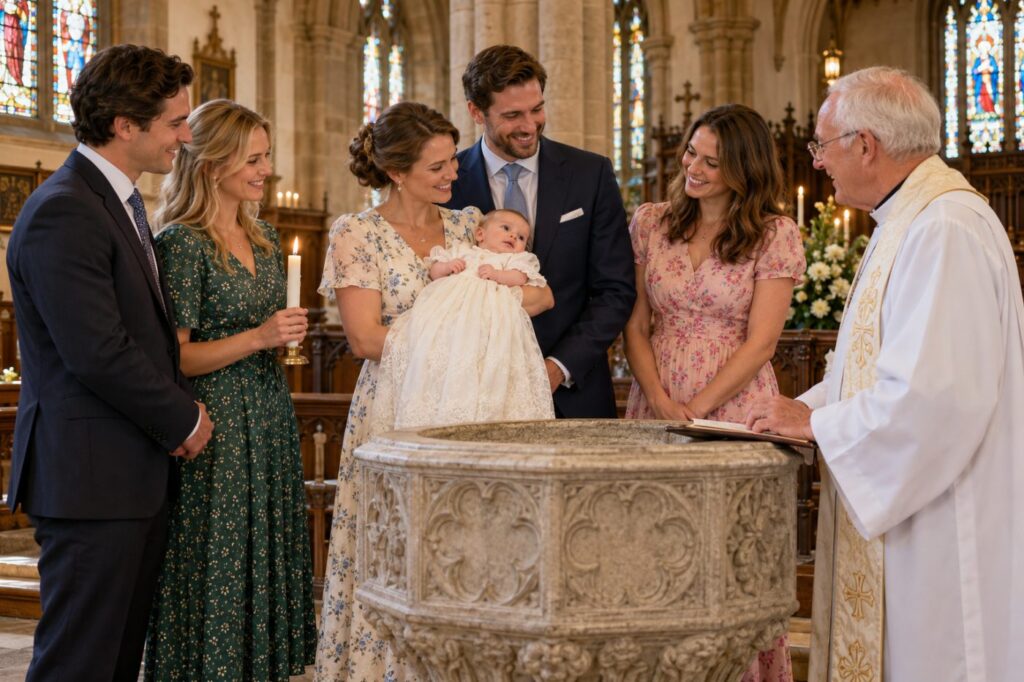
A godparent is someone chosen to take a special interest in a child’s life and to help support them in the Christian faith. At a christening (the everyday word for a baptism) the godparents stand with the parents and make promises on the child’s behalf. A woman in the role is a godmother, a man is a godfather, and the child is their godchild. That is the short answer, and it leaves out everything people worry about: whether you have to be religious, whether you are signing up to look after the child if something happens to the parents, how many godparents a child can have, and what the job involves once the christening is over. This guide answers those questions, and keeps the Church of England and the Catholic Church apart where their rules differ, because they do.
Do godparents have to be religious?
This is the question we are asked most often, and the answer depends on the church.
Church of England: a godparent must have been baptised themselves, and the church says it is preferable that they have been confirmed as well, although the vicar can waive that if three confirmed godparents cannot be found. They do not have to be regular churchgoers, and they do not have to have been baptised in the Church of England: someone christened as a Catholic or a Methodist, for example, can be a Church of England godparent. There is no fixed minimum age, but the person must be mature enough to understand the promises, and anyone under 18 should be discussed with the vicar first.
Catholic Church: the rules are stricter and are written into canon law. A Catholic godparent (the official word is sponsor) must be at least 16, must be a confirmed Catholic who has received First Holy Communion, and must be living a life in keeping with the faith. A baptised Christian from another church cannot be a Catholic godparent, but can stand alongside a Catholic godparent as what the church calls a Christian witness, and many Catholic families do exactly that with a Protestant relative or friend.
Whichever church it is, the godparents are asked, in front of everyone, to make promises about faith. If you are not religious and have been asked to be a godparent, you are not being awkward by wondering whether you can make those promises honestly. Talk to the parents about what they expect and, if you are still unsure, to the vicar or priest. It is far better to have that conversation beforehand than to feel uncomfortable at the font. And if you do not qualify as an official godparent, that is not the end of it: the Church of England says people who have not been baptised can still take part in the service and in the child’s life, and many families give a close friend that unofficial role.
Do godparents become legal guardians if the parents die?
No. This is the most common misconception about godparents, and it is worth being blunt about. Being a godparent is a religious and moral role; it creates no legal relationship with the child, and a godparent does not automatically become the child’s guardian if both parents die. The Church of England says so in its own christening FAQs, and so do family solicitors.
If parents want a particular person to look after their children should the worst happen, they have to arrange that separately. Parents can appoint someone as a legal guardian, often through a will, but the arrangements must be made properly, and whether and when the appointment takes effect depends on the family’s circumstances and on who else has parental responsibility for the child. If nobody has been appointed, a court decides, and it may not choose the person the parents would have wanted. Many parents do ask a godparent to be their children’s guardian as well, which is fine; but being named as a godparent at a christening does not, by itself, create any legal guardianship. The rules also differ between England and Wales, Scotland and Northern Ireland. We are a gift shop, not a law firm, so if this matters to you, make a will and take legal advice.
What do godparents do at a christening?
In a Church of England christening the parents and godparents stand with the child, usually at the font, and answer the same questions. They make the promises on the child’s behalf, to turn away from what is wrong and to turn to Christ, and the vicar asks them two questions about the child, in words from the Church of England’s own guide for godparents: “Will you pray for them, draw them by your example into the community of faith and walk with them in the way of Christ?” and “Will you care for them, and help them to take their place within the life and worship of Christ’s Church?” The answer to both is “With the help of God we will.” Those two sentences are the job description. Godparents have to be there in person: the Church of England does not allow godparents by proxy, and only the godparents present on the day are entered in the baptism register.
In a Catholic baptism the godparent, with the parents, presents the child for baptism, answers for the child when the baptismal promises are made, and may help with the baptismal candle. Canon law puts the ongoing duty simply: the godparent is to help the baptised person lead a Christian life in keeping with baptism.
Some families invite a godparent to read a prayer or a Bible passage, although that is not a requirement; the godparents’ main role during the service is to make the promises and stand alongside the parents. Our christening guide explains the rest of the day, and our guide to religious ceremonies covers the differences between a baptism, a dedication and a naming ceremony.
How many godparents can a child have?
Church of England: the rule is at least three, two of the same sex as the child and one of the opposite sex, so a girl usually has two godmothers and a godfather, and a boy two godfathers and a godmother. If three cannot be found, one godfather and one godmother are enough. There is no official maximum, although the church says three or four is usual, and a parish may have its own view about six. Parents can be godparents to their own children, provided the child has at least one other godparent.
Catholic Church: one godparent is enough, and the maximum is two, who must be one man and one woman. Parents cannot be their own child’s godparents.
A married couple, two friends or two siblings can certainly both be godparents, in either church; the Catholic rule simply means a couple would be the godfather and the godmother, with no room for a third. Relatives are allowed, and grandparents, aunts and uncles are common choices. The Church of England puts the test well: choose people you trust, who are going to stay in touch with your family for many years, and who are ready to make some big promises about faith for your child in church.
Choosing godparents and asking them
Ask well before the christening. It is a commitment the person should have time to think about, the church may have requirements they need to check, and if someone needs to say no (which they are entitled to do, and some do, honestly, because they could not make the promises) you want to know early. Be clear about what you are asking. A godparent is more than an honorary title, especially in a religious ceremony, and the person deserves to know whether you are hoping for Sunday-school support or Sunday-lunch support. There is no need for an elaborate gift when asking someone to be a godparent. A conversation or a thoughtful card is perfectly sufficient, although some families like to make the invitation a little more special.
Can you change godparents after a christening?
Not officially, at least in the Church of England. The baptism register is a historical record and the church does not alter it or re-christen a child, so if a godparent moves abroad, loses touch or the friendship ends, their name stays in the book. Families can instead ask another trusted friend or relative to play a similar role in the child’s life, although that does not change the official record. It is one reason to choose godparents for the long haul rather than for who is closest this year.

What godparents do as the child grows up
The promises are about a lifetime, not a morning. The Church of England’s guide for godparents describes the role as praying for the child, setting an example of Christian values, making time to talk about the bigger questions of hope, faith and love, helping them to make good choices, and supporting them in understanding their faith, whether that is coming to church with them, talking about the Bible or learning to pray. Catholic godparents have the same ongoing duty, and may be asked to act as the child’s sponsor at confirmation if they are eligible; our confirmation guide explains that role.
Alongside the religious side there is the ordinary business of being a grown-up the child knows, trusts and can turn to. We often see godparents buying gifts again for their godchild’s First Holy Communion or confirmation, sometimes years after the christening, but nobody expects a present for every occasion. Keeping in touch, turning up, sending a card, taking the child out for an afternoon and remembering what matters to them are worth far more than anything in a box. The gifts are optional; the commitment is the point.
Our number-one tip for a new godparent
Don’t panic. The two things people worry about when they are first asked are whether they are religious enough and whether they have just agreed to raise someone else’s children. The first is a conversation to have with the parents and the church, and nobody should feel pressured into making promises they cannot sincerely keep. The second is a myth: you are not becoming a legal guardian unless the parents separately make you one. Beyond that, take an interest in the child’s life. You do not have to become a perfect role model overnight, buy expensive presents or suddenly know everything; being someone the child can rely on as they grow up is the valuable part, and the religious godparent has the promises they made to keep alongside it.
Where godparents come from
The tradition of godparents grew out of baptismal sponsorship in the early Christian church. Originally a sponsor (the word comes from the Latin spondere, to promise) vouched for an adult preparing for baptism and helped them learn the faith. As infant baptism became more common, sponsors increasingly took on the promises a baby could not make, and at first that was usually the parents: early writers such as St Augustine treated the birth parents as the normal sponsors. Over the following centuries other adults took over the role, and in the ninth century the church forbade parents from sponsoring their own children, the Council of Mainz in 813 being the last to rule on it, which is why the Catholic Church still does not allow it. The Church of England’s rule of three godparents is usually traced to the Synod of Worcester in 1240, whose statutes required three, two of the child’s sex and one of the other, exactly as the church asks today. The Council of Trent in the sixteenth century limited Catholic godparents to one or two, which is still the Catholic rule.
In the Middle Ages the relationship was treated as a real kinship. Godparents were spiritual co-parents, and the church forbade marriage between a godparent’s family and the godchild’s, just as it did between blood relatives. That idea survives in our language: the Old English godfaeder and godmodor gave us godfather and godmother, and godsibb, a person related through God, became the word gossip, which first meant a godparent or close family friend and only later came to mean the talk such friends got up to. The Reformation left the custom in place in England, apart from a brief abolition under the Puritan parliament in the mid-seventeenth century, while in the Catholic Church it carried on largely unchanged, which is how two churches a few streets apart came to have different rules for the same role.
Guideparents and naming ceremonies
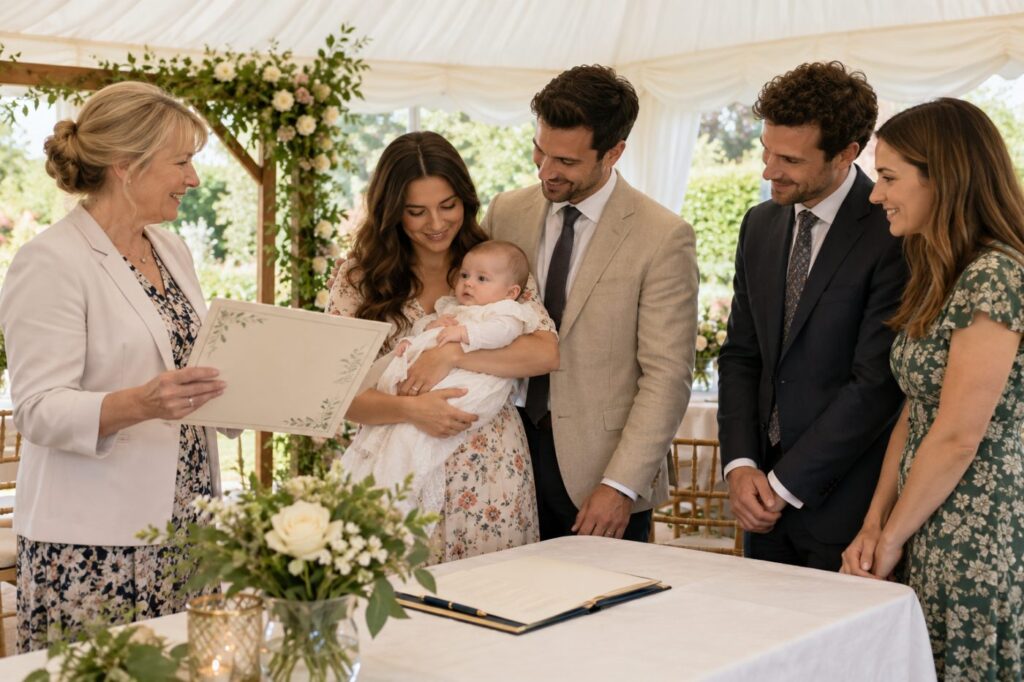
Not every family is religious, and plenty want a trusted friend or relative to play a special part in their child’s life without a church service. The non-religious equivalent of a christening is a naming ceremony, and the non-religious equivalent of a godparent is often called a guideparent. Humanists UK describes them as supporting adults with a special interest in and a commitment to the child throughout their life; at a humanist naming ceremony they can make their own promises to the child and sign the naming certificate, and a family can have as many as they like.
We regularly see customers choosing “Guideparent” rather than “Godparent” on their personalised thank-you gifts, which says something about the popularity of non-religious naming ceremonies. It is worth being clear, though, that a guideparent is not simply a godparent under another name. The underlying commitment to support the child may look much the same, but there are no religious promises, no church rules about baptism or confirmation, and no register. And, exactly as with godparents, being a guideparent does not make anyone a legal guardian. Our naming day guide explains how the ceremonies themselves work.
Godparents and gifts
Gifts run in both directions, and neither is compulsory.
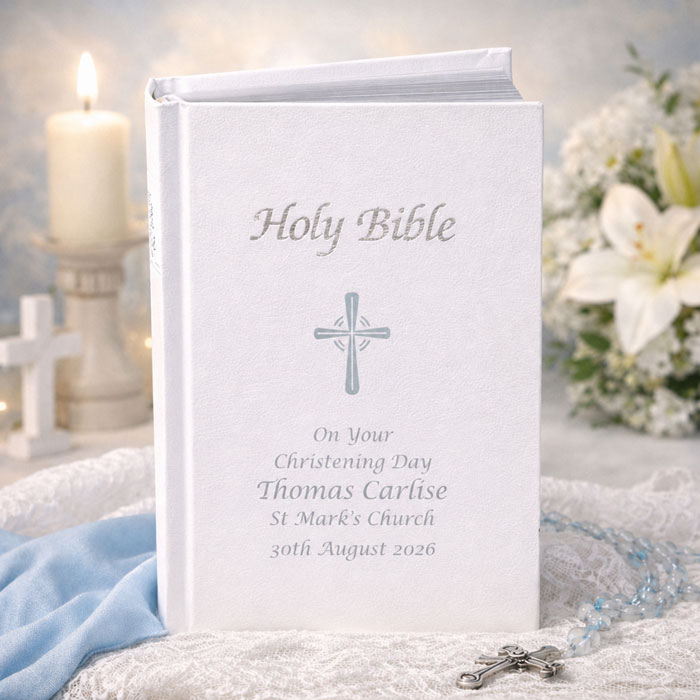
From the godparent to the child. This is the traditional one, and in our experience godparents are among the most generous christening buyers. They usually want something that lasts and that says what the day was about, and a personalised Bible with the child’s name and the date of the christening on the cover is the traditional choice, particularly from a godparent or grandparent. We also see godparents returning to buy gifts for later milestones, such as First Holy Communion and confirmation. Our guide to Bibles explains the different editions, including why a Catholic family may want a Catholic Bible.
From the parents to the godparent. Some parents like to give the godparents a small present on the day, as a thank-you for accepting the role, and it is a lovely gesture; it is not an obligation, and no godparent should expect one. Two popular choices are our engraved godfather tankard and our personalised silver-plated godmother photo frame, usually with the child’s name and the date, so that the godparent has their own keepsake of the day. For guideparents, choose one of the gifts where the wording is entirely yours, so that it can say “Guideparent”, or whatever word your family uses, rather than Godmother or Godfather.


A present is a lovely way to mark a christening, but the role of a godparent goes well beyond the day itself. Keeping in touch and taking an interest as the child grows up matter far more than any gift.