
Christenings at Any Age: Older Children, Adults and Gift Ideas
15 March 2018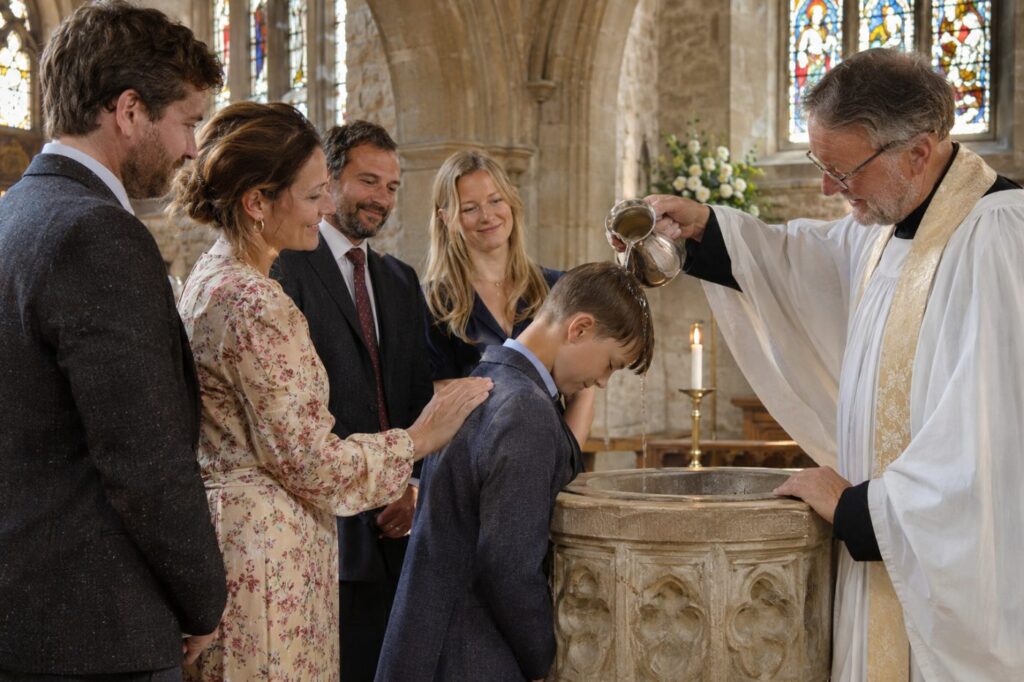
Yes, you can be christened at any age. Neither the Church of England nor the Catholic Church sets an upper age limit, and people are baptised as schoolchildren, as teenagers and as adults far more often than most of us realise. (A christening and a baptism are the same thing, by the way: the baptism is the moment with the water, and “christening” is the everyday name for the service around it.)
The Church of England’s latest figures, for 2025, make the point. Of the 58,000 people it baptised that year, fewer than half (23,800) were babies under one. Around 21,400 were children aged one to ten, 2,900 were aged 11 to 17, and 9,900 were adults, a number the report says may well be the highest there has ever been. The figures come from its annual Statistics for Mission report, published in November 2026.
We have sold christening gifts at Born Gifted for many years, and a later christening is a different occasion from a baby’s in several ways, the presents included. This guide covers what changes when the person being christened is older, how the Church of England and the Catholic Church each go about it, and what to give someone who is well past the silver-rattle stage. If it is a baby’s christening you are planning, start with our guide to planning a christening instead.
Is there an age limit for a christening?
No. The Church of England’s own guidance says there is no set minimum or maximum age for a child’s christening, and its page on adult baptism tells grown-ups plainly that they are never too old. The Catholic Church likewise baptises people of every age who have not been baptised before.
What changes with age is who makes the promises. At a baby’s christening the parents and godparents make them on the child’s behalf. Once a child is old enough to understand what is being said, they can answer for themselves.
Why are some people christened later?
For all sorts of reasons, and none of them needs justifying to anybody. Some parents prefer to leave the decision until the child can make it. Some families start going to church when the children are already at school. Some adults come to faith, or come back to it, at twenty-five or at seventy-five. Some families also consider baptism when looking at faith-school admissions, although requirements vary between schools and baptism does not guarantee a place.
Christening an older child or teenager
In the Church of England a christening has the same main moments at any age: the promises, the sign of the cross, the water and, in many churches, a candle to take home. What changes as a child gets older is who does the talking. There is no fixed age at which children start to make the promises for themselves. The Church’s christening FAQs suggest “perhaps around age 12”, the Diocese of Derby says from about seven, and in practice it is settled in conversation between the family and the vicar, who will also explain how the service differs from a baby’s.
The Catholic Church draws a clearer line. A child under seven is treated as an infant and baptised as a baby would be. From about seven, which the Church calls catechetical age, a child who has not been baptised is prepared through an adapted form of the route adults take, described in the next section. In the Diocese of Westminster, for example, children between seven and thirteen follow the children’s version, and anyone older joins the adult process.
Adult baptism: how to get christened
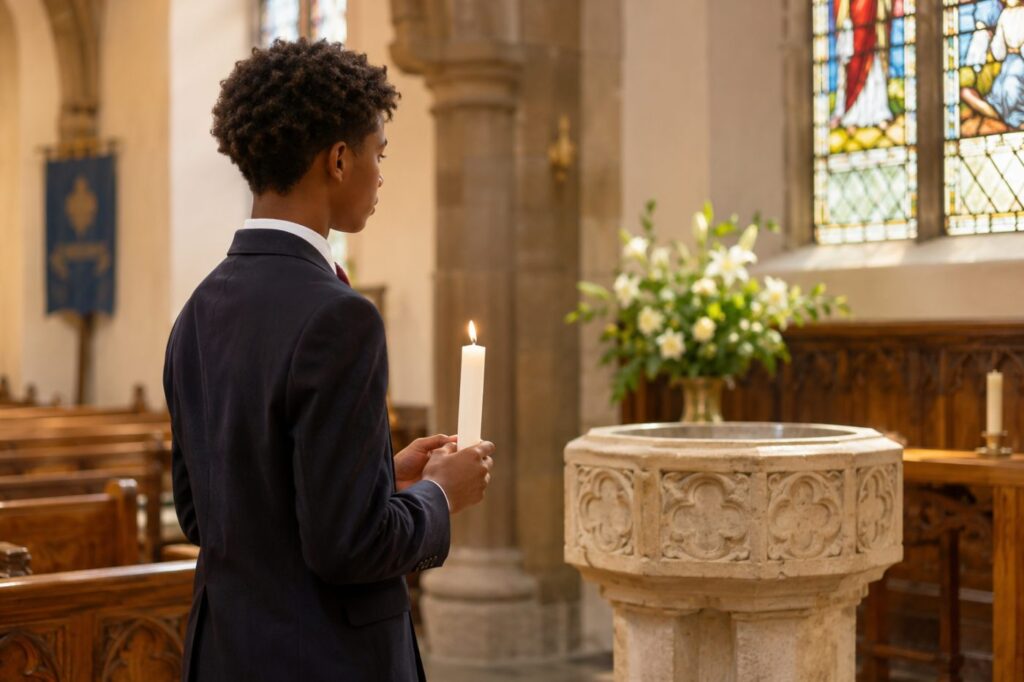
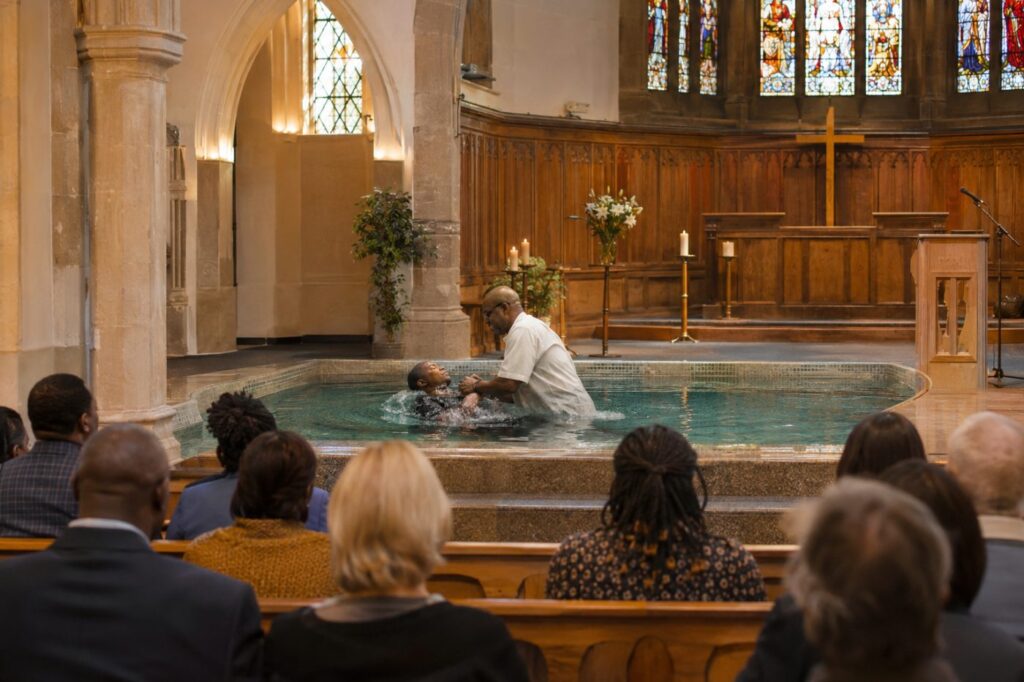
In the Church of England, the first step is to contact your local vicar. (If you are not sure which church is yours, A Church Near You will find it from a postcode.) You may be asked to come to a few sessions exploring the Christian faith, often alongside other people doing the same, and then there is a service at which you are baptised. Usually the water is poured over your head at the font, though some churches have a pool and baptise by full immersion. Anyone who was not baptised as a child has to be baptised before they can be confirmed, and the Church says the two can happen in the same service. Our guide to confirmation explains that side of things.
In the Catholic Church, adults prepare through the Rite of Christian Initiation of Adults, usually shortened to RCIA. It is a period of enquiry and preparation with no fixed length, and it leads up to Easter. There is a service called the Rite of Election, usually on the first Sunday of Lent, and the baptisms themselves normally take place at the Easter Vigil, on the night before Easter Sunday (27 March in 2027). Adults baptised then are normally confirmed and receive Communion for the first time in the same service. Each newly baptised person is presented with a lighted candle, and may be given a white garment as well. The place to start is a conversation with the priest at your local parish.
Some churches only ever baptise people who are old enough to decide for themselves. Baptist churches are the best-known example: the Baptist Union of Great Britain says Baptists do not baptise infants, only those able to make their own declaration of faith, and that the person is usually fully immersed in water. For them, a “later” baptism is simply a baptism.
Can you be christened again if you were christened as a baby?
Not in the Church of England or the Catholic Church. Both treat baptism as something that happens once. The Church of England’s confirmation FAQs say you can only be baptised once, and the Catholic Church’s Catechism says that baptism cannot be repeated. If you were christened as a baby and want to make the promises for yourself as an adult, confirmation is the usual route, and the Church of England also has ways of renewing your baptism promises. Your vicar can explain both. Someone who has already received a baptism that the Catholic Church recognises as valid would normally be received into the Church without being baptised again. If there is any uncertainty about an earlier baptism, the priest can advise.
Not sure whether you were christened? Every christening is recorded in the baptism register of the church where it took place, so the parish church where you lived as a baby is the place to begin asking.
Godparents and sponsors
An older child still has godparents. In the Church of England the normal arrangement is at least three, two of the same sex as the child and at least one of the opposite sex, although one godmother and one godfather are enough if three cannot conveniently be found. Godparents must be baptised themselves, and the vicar can explain what is expected about confirmation. An older child may well be involved in choosing them, depending on their age and understanding, but that is a matter for the family, not a rule.
An adult has sponsors instead: in the Church of England, two or three people of their own choosing who stand with them at the font. In the Catholic Church one sponsor is enough. He or she is chosen by the person being baptised, must normally be at least 16, must be a confirmed Catholic who has received Communion, and cannot be the candidate’s mother or father. An older child preparing for a Catholic baptism has an adult sponsor too. Our guide to what godparents do covers the role and the rules in more detail.
Do you need a parent’s permission?
If you are 18 or over, the decision is yours alone. For anyone under 18, the church will normally involve those with parental responsibility. If parents or guardians disagree, raise it with the vicar or priest before making any arrangements. The church can explain how its rules apply to your circumstances.
Planning a later christening
Our number-one tip is to contact the church well ahead of time. If we were planning a baptism for an older child or an adult, we would make the first enquiry three to six months in advance. That is our own suggestion, not a church rule, and not a promise that everything can be done in that time. But unlike many baby christenings, a later one may involve preparation sessions, conversations with the vicar or priest, and a particular service in the church’s calendar. A Catholic adult baptism at Easter comes at the end of a much longer period of preparation. Starting early gives you time to understand the process and avoids disappointment over dates.
As for cost, the Church of England says a christening service is free. A party, a new outfit and presents are all optional.
What to wear
We do not make the church’s rules, so treat this as common sense rather than a requirement: dress about as smartly as you would for a baby’s christening. For an older boy, smart trousers and a shirt are perfectly reasonable. For an older girl, a dress or another smart outfit is fine. Adults can follow the same principle, and there is no need to buy an expensive new outfit unless you want to.
Full immersion is a different matter, for obvious practical reasons. If the baptism involves a pool rather than a font, ask the church what to wear and what to bring. Ask, too, about anything else that is expected on the day.
After the service
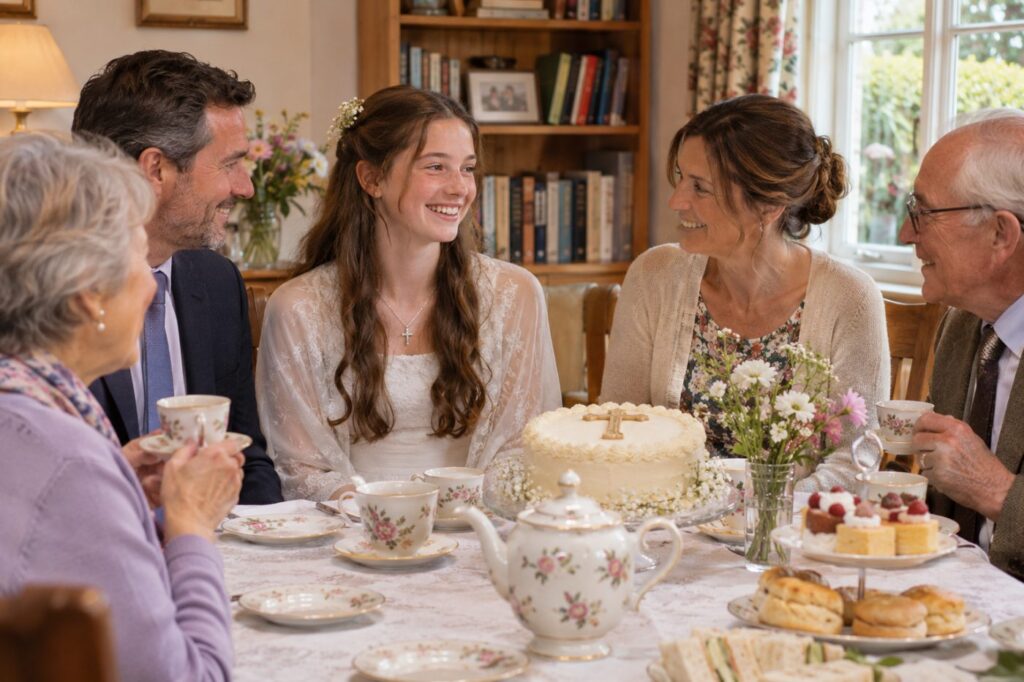
In our experience the celebrations for older children and adults tend to be a little more understated than those for babies. A baby’s christening can turn into quite a large family gathering, with plenty of guests and presents. For an older child or an adult it is more likely to be something smaller: cake and a few nibbles at home, perhaps, or a nice meal at a local pub or restaurant. It is entirely up to the family and the person being baptised. Nobody is obliged to organise a party, and a quiet meal can be just as enjoyable.
Christening gifts for older children, teenagers and adults
The presents work differently too. At a baby’s christening most guests bring something. For an older child or an adult there tend to be fewer gifts, and they usually come from the people closest to them: godparents, sponsors and immediate family. The traditional baby keepsakes, the silver rattles, money boxes and soft toys, no longer fit. What we see instead is more interest in Bibles, rosaries, simple religious jewellery, engraved crosses and chains, cufflinks, and other things the person can actually use or wear. Bear in mind that an adult being baptised may not want a present at all. If in doubt, ask.
A few years ago, I attended the baptism of a friend who was in her late twenties. Before the service started she was sitting in the front pew, looking slightly apprehensive. Her grandfather, a fairly quiet man, walked over just before the vicar appeared and handed her a small, rather worn box. Inside was a simple silver cross that he had carried in his pocket for much of his life; it turned out that he had been given it at his own baptism as a child. He made no speech and no fuss. He put his hand on her shoulder and said, “Carry it well.” When the vicar poured the water over her head, she was holding the cross tightly in her hand.
I’ve remembered that moment ever since. It was a lovely example of how a simple keepsake can mean so much more than its monetary value.
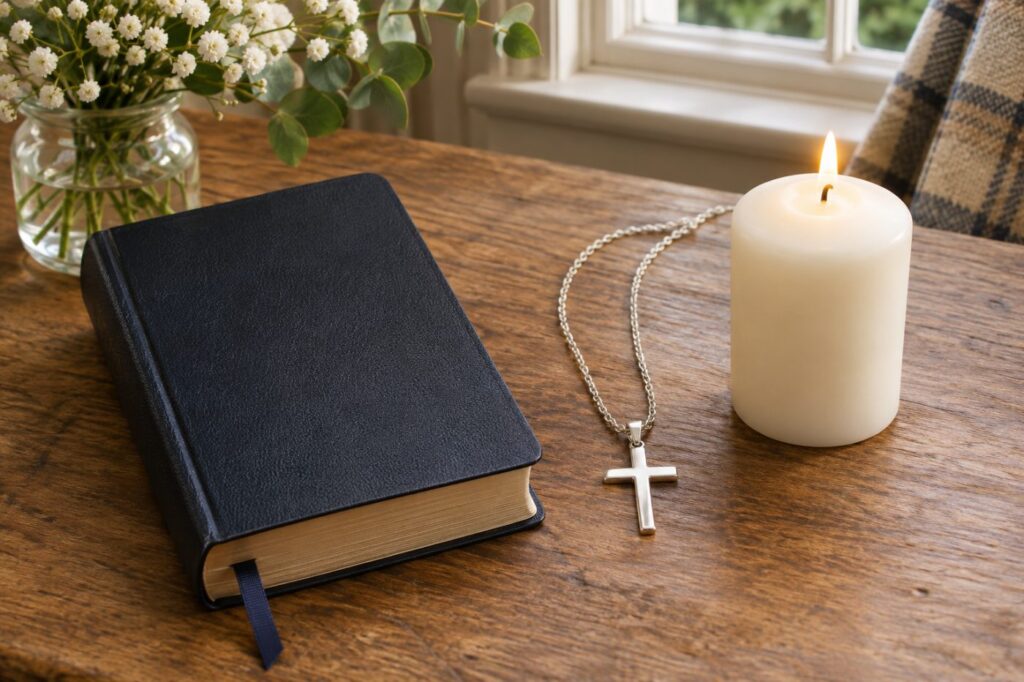
The suggestions below are our own recommendations for different ages, not a list of bestsellers, and the right choice always depends on the person. A child who is keen on their faith may love a Bible; another would much rather have something to wear every day.
Christening gifts for older boys (8 to 12)
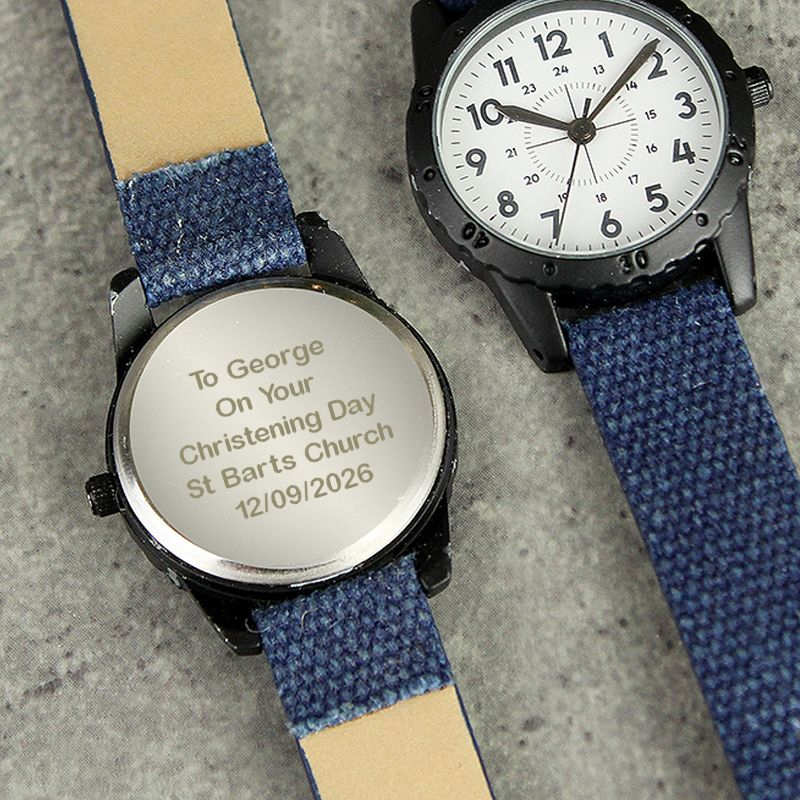
Our first choice would be the personalised black watch with a blue canvas strap. It is a practical gift that a boy of this age can wear regularly, rather than a traditional baby keepsake, and the back can be engraved with up to five short lines. A Bible, such as our boy’s Bible with a blue cross, or a simple cross keepsake such as our engraved sterling silver cross necklace would also suit.
Baptism gifts for teenage boys
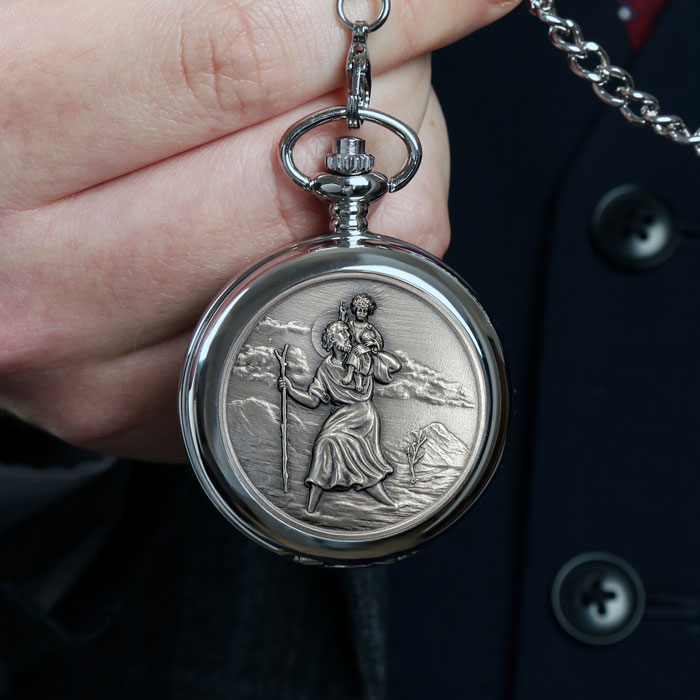
A pocket watch is a more grown-up present than most christening gifts, and one that can be kept for years. Our St Christopher pewter pocket watch has St Christopher on the front of the case and room on the back for an engraved message of up to 70 characters. There is also a godson version with the words “On Your Christening Godson” on the front, which is the one to choose only if you are his godparent.
Adult baptism gifts for men
We would look at engraved cufflinks (our initial cufflinks take up to three initials), a traditional engraved tankard or a sterling silver St Christopher necklace with a short message on the back. The necklace comes on a 14, 16 or 18 inch chain, so check that the length will suit him before you order. A good-quality Bible is a sensible choice as well, particularly for someone beginning to explore their faith. One thing to know before you buy: our personalised full-text Bibles, including our white christening Bible, are King James editions. If the person is Catholic, or would prefer a modern translation, check which edition they use before ordering. Our guide to the different types of Bible explains the differences.
Christening gifts for older girls
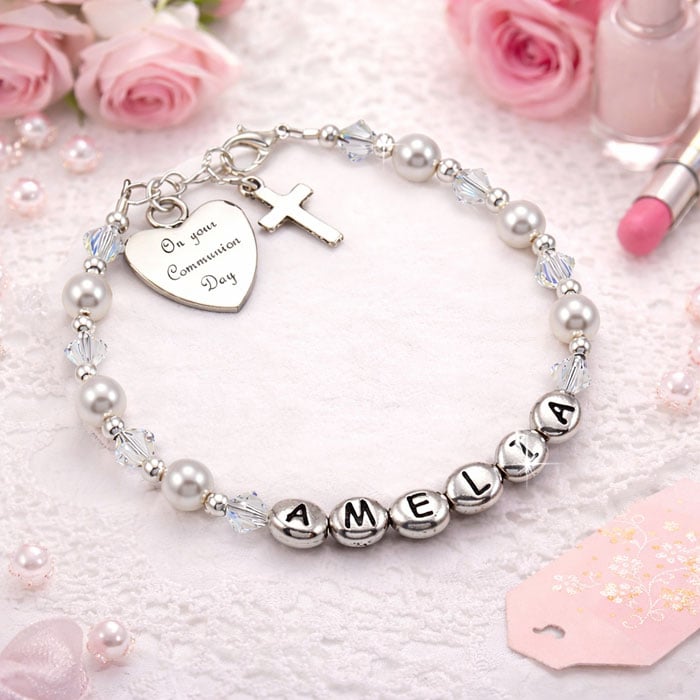
Personalised name bracelets are a good choice, including our First Communion and christening name bracelet. It spells out a first name of up to eight letters, has a heart charm that is engraved on both sides, and comes in sizes from baby to adult, so it is not only for very young girls. Another is the Bible-shaped trinket box, which is silver plated, engraved on the front and just right for jewellery or a rosary. For a girl who would like something more plainly religious, consider a Bible, such as our girl’s Bible with a pink cross, or a simple cross necklace such as our sterling silver heart and cross necklace.
Adult baptism gifts for women
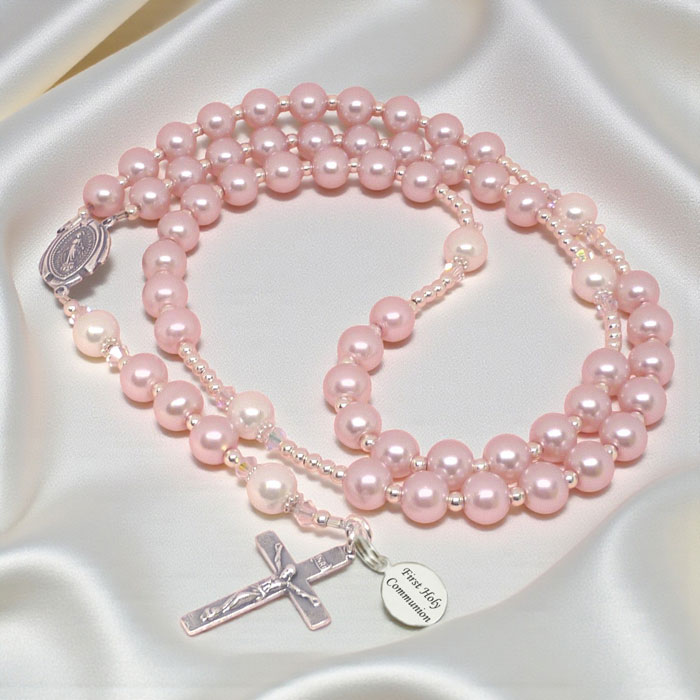
Our particular recommendation is the personalised pearl and sterling silver rosary, which has a small silver tag behind the cross that can be engraved. It is especially appropriate for a Catholic baptism, though a rosary will not be to everyone’s taste. A silver cross necklace, such as the heart and cross necklace on its longest chain of 18 inches, or a Bible such as our companion Bible with a gold cross, may suit better, depending on the person’s faith and style.
And for any age, a personalised candle echoes the candle that is often given in the service itself.
Engraving and ordering
On wording, nothing unusual is called for. Most people keep it traditional: the person’s name, the date of the baptism, or a short message from the giver. Some gifts allow a longer dedication, but there is no need to go hunting for a Bible verse unless you want one. Two checks are worth making before you order. First, confirm the exact date with the family. Second, read the listing to see how much space there is and whether any of the wording is fixed. Some of our gifts say “Christening” on them and others “Baptism”, and it is worth matching the word the family uses.
Every product page shows a delivery estimate, so check it before you order and leave yourself a margin, particularly in the run-up to Easter, when Catholic adult baptisms usually take place.